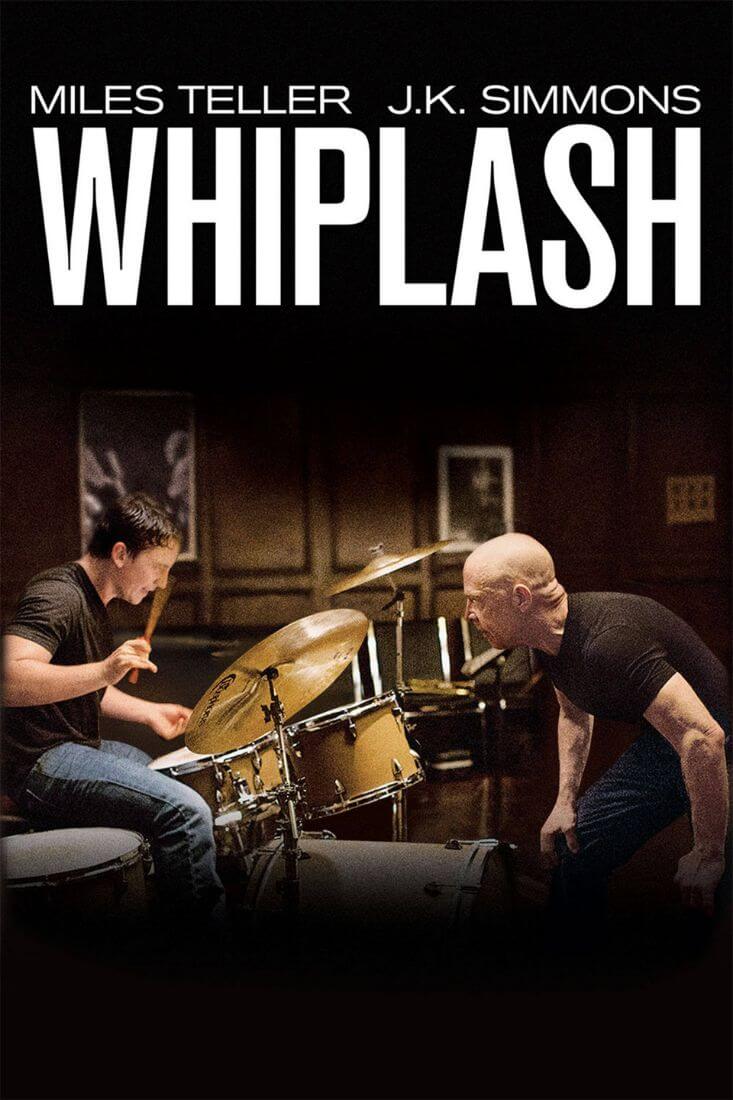
Whiplash
Intense, visceral, relentless
Based on a publicly circulated draft of this screenplay sourced online — it may differ from the official shooting script or final film. Shown to demonstrate ProofIntelligence.
A driven young jazz drummer at an elite conservatory is pushed to his breaking point by a ruthless instructor whose pursuit of perfection blurs the line between mentorship and abuse, culminating in a high-stakes performance that will define them both.
Executive Summary
Whiplash is a contained, high-intensity psychological drama that delivers blockbuster-level tension on an indie budget — the produced version returned 15x its investment and won three Academy Awards including Best Supporting Actor. The screenplay's commercial engine is the Fletcher role, which is a magnet for top-tier acting talent seeking career-defining work. For the Indian market, this story resonates powerfully with the guru-shishya tradition and the culture of competitive excellence, making it ideal for either a direct adaptation or as a benchmark for original projects exploring similar themes. The risk profile is exceptionally favorable: low production cost, high critical ceiling, strong OTT value, and proven international commercial viability.
Why this verdict
Whiplash is a masterfully constructed psychological drama that operates with the precision of its own musical subject matter. The screenplay delivers an exceptionally tight two-hander between Andrew and Fletcher, with escalating stakes that never relent. The thematic exploration of greatness versus human cost is woven into every scene, every confrontation, and every sacrifice. The final act's reversal — Fletcher's sabotage followed by Andrew's transcendent solo — is one of the most electrifying climaxes in modern screenplay writing, earning its emotional payoff through meticulous setup across the entire script.
Score Breakdown
Casting
J.K. Simmons
as FLETCHER
Simmons possesses the rare combination of physical authority, volcanic intensity, and unexpected vulnerability that Fletcher demands. His ability to shift from warm charm to terrifying rage within a single scene — demonstrated across decades of character work — makes him the definitive choice for this role.
Miles Teller
as ANDREW
Teller brings the essential combination of physical capability (he is an actual drummer) and emotional transparency that Andrew requires. His everyman quality makes Andrew's transformation from shy student to obsessive artist both believable and deeply affecting.
Paul Reiser
as JIM
Reiser's natural warmth and gentle demeanor perfectly embody Jim's quiet resignation and unconditional love. His ability to convey deep emotion through understatement — the downcast eyes, the soft voice — would make Jim's final scene devastating.
Melissa Benoist
as NICOLE
Benoist projects an unforced naturalness and approachable beauty that matches Nicole's description — pretty but doesn't know it, doesn't care. Her ability to convey vulnerability and quiet strength in limited screen time would maximize Nicole's impact.
Austin Stowell
as RYAN
Stowell has the physical presence of a natural athlete-musician — the macho confidence and easy charm that makes Ryan both likeable and threatening as Andrew's rival. His all-American look contrasts perfectly with Andrew's slight, intense physicality.
Pacing & Rhythm
Overall pace
Relentlessly escalating with strategic breathers
The pacing curve mirrors a jazz composition — it builds, retreats, builds higher, retreats less, then explodes into an extended climactic solo. The deliberate valley in pages 78-86 (post-expulsion) is essential: it gives the audience and Andrew a chance to breathe before the final devastating escalation. The script's two major peaks (Dunellen car crash at page 72 and Carnegie Hall solo at page 105) are perfectly spaced, with the second exceeding the first in both intensity and emotional complexity. Chazelle understands that pacing is rhythm, and this script has impeccable rhythm.
SLOW · pp. 78–86
Post-expulsion montage of Andrew's mundane life — sandwich shop, watching movies with Jim, college applications
Fix: These scenes are necessary for contrast but could be trimmed by 2-3 pages. The emotional flatline is intentional but risks losing momentum before the crucial jazz club encounter.
RUSHED · pp. 86–92
The jazz club encounter and Fletcher's recruitment happen very quickly — Fletcher's philosophical monologue and the invitation compress a lot of character work into a short span.
Fix: Consider adding one more beat of Andrew's internal deliberation or a scene showing him processing the invitation before jumping to rehearsal. The speed works cinematically but the script could breathe slightly more here.
Conflict Escalation
The conflict escalation is masterfully orchestrated with two major peaks — the Dunellen car crash/performance disaster and the Carnegie Hall sabotage/transcendence. The script employs a deliberate valley between Acts Two and Three (Andrew's post-expulsion depression) that makes the final escalation even more powerful. Each confrontation between Andrew and Fletcher raises the stakes: from verbal intimidation to physical violence to psychological warfare to public sabotage. The tension never feels manufactured because it's rooted in character — Fletcher's need to control and Andrew's need to prove himself create an inherently escalating dynamic.
Peak moment · page 105
Andrew's extended drum solo at Carnegie Hall — having been sabotaged by Fletcher, he seizes control of the stage, reaches 450 BPM, and delivers a performance that stuns the audience, the industry professionals, and Fletcher himself. The peak is both musical and psychological: Andrew has transcended Fletcher's control entirely.
Protagonist Arc
Andrew's internal arc is a masterpiece of controlled descent and explosive resurrection. The curve shows a pattern of diminishing returns — each triumph is smaller and more costly than the last, while each defeat cuts deeper. The absolute nadir at Dunellen (page 76) is followed by a long, flat depression before the jazz club encounter reignites him. The final arc from -90 (sabotage revelation) to +90 (transcendent solo) in just nine pages is breathtaking — it's the emotional equivalent of Andrew's drumming reaching 450 BPM. Crucially, the script leaves ambiguous whether Andrew's final state represents genuine self-actualization or the completion of his destruction as a human being.
Scene Audit
40 scenes evaluated — tension, pacing contribution, and whether each earns its place.
| Pg | Scene | Purpose | Tension | Verdict |
|---|---|---|---|---|
| 1 | INT. NASSAU BAND REHEARSAL STUDIO - GEHRING HALL ANDREW · FLETCHER | Establishes Andrew's skill level and Fletcher's intimidating presencePerfect cold open — hooks immediately with power dynamic | 30accelerates | essential |
| 3 | INT. MOVIE THEATER - LOBBY ANDREW · NICOLE | Introduces Nicole and establishes Andrew's romantic shynessEfficient character establishment; sets up future sacrifice | 10decelerates | essential |
| 4 | INT. MOVIE THEATER ANDREW · JIM | Establishes father-son dynamic and Jim's resigned worldviewSeeds the central thematic conflict about ambition vs acceptance | 15decelerates | essential |
| 6 | INT. DORMITORY - ANDREW'S ROOM ANDREW | Buddy Rich documentary establishes Andrew's idol worshipVisual storytelling — posters and TV define Andrew's world | 10maintains | essential |
| 7 | INT. GEHRING HALL - NASSAU BAND ROOM ANDREW · RYAN · MR. KRAMER | Establishes Nassau Band hierarchy and Ryan as rival/peerSets up Ryan rivalry and Andrew's inferior position | 20maintains | essential |
| 9 | INT. GEHRING HALL - NASSAU BAND ROOM ANDREW · MR. KRAMER | Kramer's candid assessment crushes Andrew's confidenceKramer's dismissal motivates Andrew's desperation | 25maintains | essential |
| 10 | INT. ANDREW'S PRACTICE ROOM ANDREW | Andrew practices obsessively — drumstick snaps, hands blisterFirst physical cost of ambition — foreshadows escalation | 30accelerates | essential |
| 11 | INT. MOVIE THEATER LOBBY ANDREW · NICOLE | Andrew asks Nicole out — first proactive personal choiceCharming scene; establishes what Andrew will later sacrifice | 15decelerates | essential |
| 12 | INT. GEHRING HALL - FLETCHER'S OFFICE ANDREW · FLETCHER | Fletcher manipulates Andrew into staying at ShafferMasterclass in manipulation — warm tone hides control | 40accelerates | essential |
| 16 | INT. GEHRING HALL - NASSAU BAND ROOM ANDREW · FLETCHER · RYAN · MR. KRAMER | Fletcher selects Andrew for Studio BandMajor turning point — Andrew enters Fletcher's world | 50accelerates | essential |
| 19 | INT. PIZZERIA ANDREW · NICOLE | First date — warmth, vulnerability, human connectionLast genuinely warm scene; makes later sacrifice devastating | 5decelerates | essential |
| 23 | INT. GEHRING HALL - STUDIO BAND ROOM ANDREW · FLETCHER · CARL | Andrew's first Studio Band rehearsal — Fletcher's warmthFalse security before the storm — Fletcher is cuddly | 35accelerates | essential |
| 25 | INT. GEHRING HALL - STUDIO BAND ROOM FLETCHER · METZ | Fletcher humiliates and expels Metz — establishing terrorDefines Fletcher's method — cruelty as pedagogy | 65accelerates | essential |
| 30 | INT. GEHRING HALL - STUDIO BAND ROOM ANDREW · FLETCHER | Fletcher hurls chair at Andrew, slaps him repeatedlyScript's first major eruption — redefines the stakes entirely | 85accelerates | essential |
| 36 | INT. DORMITORY - ANDREW'S ROOM ANDREW · JIM | Andrew breaks down on phone with Jim after humiliationEmotional aftermath; Jim's words backfire on him | 40decelerates | essential |
| 37 | INT. GEHRING HALL - FLETCHER'S OFFICE ANDREW · FLETCHER | Andrew pledges commitment — resolve crystallizesBrief but pivotal — Andrew chooses Fletcher's world | 30accelerates | essential |
| 38 | MONTAGE - VARIOUS ANDREW · FLETCHER | Training montage — parallel lives of student and teacherElegant parallel structure — both men are alone | 25accelerates | essential |
| 40 | INT. DUNELLEN AUDITORIUM - GREEN ROOM FLETCHER · ANDREW · CARL | Pre-competition prep — Fletcher's dual personality on displayWarm with child, vicious with band — duality crystallized | 45accelerates | essential |
| 43 | INT. DUNELLEN AUDITORIUM - HALLWAY ANDREW · CARL | Andrew loses Carl's music folder — crisis pointCatalyzes Andrew's opportunity to prove himself | 60accelerates | essential |
| 46 | INT. DUNELLEN AUDITORIUM - STAGE ANDREW · FLETCHER | Andrew plays from memory — first real triumphEarned victory — pays off the memorization setup | 55accelerates | essential |
| 48 | INT. STUDIO BAND ROOM - GEHRING HALL ANDREW · FLETCHER · CARL | Andrew promoted to core — Carl demotedPower shift — Andrew ascends, consequences begin | 40maintains | essential |
| 49 | INT. JIM'S HOUSE - DINING ROOM ANDREW · JIM · UNCLE FRANK · AUNT EMMA · TRAVIS · DUSTIN | Family dinner — Andrew's obsession clashes with normalcyBrilliant ensemble scene — externalizes internal conflict | 50maintains | essential |
| 54 | INT. COFFEE SHOP ANDREW · NICOLE | Andrew breaks up with Nicole — sacrifices human connectionMidpoint scene — Andrew fully commits to Fletcher's philosophy | 35maintains | essential |
| 56 | INT. GEHRING HALL - STUDIO BAND ROOM ANDREW · FLETCHER · RYAN | Fletcher introduces Ryan as competition — threatens Andrew's positionStakes raised — Andrew's sacrifice may be for nothing | 65accelerates | essential |
| 59 | INT. ANDREW'S PRACTICE ROOM ANDREW | Andrew practices until hands bleed — physical self-destructionVisceral — ice water and blood define the cost | 55accelerates | essential |
| 60 | INT. GEHRING HALL - STUDIO BAND ROOM ANDREW · FLETCHER · RYAN · CARL | Sean Casey revelation — Fletcher's grief becomes rageEmotional complexity — Fletcher's pain is real | 70accelerates | essential |
| 63 | INT. GEHRING HALL - STUDIO BAND ROOM ANDREW · FLETCHER · RYAN · CARL | All-night drumming torture — three drummers compete for the partSustained brutality — the script's most punishing sequence | 90accelerates | essential |
| 67 | EXT. ROAD TO DUNELLEN - GREYHOUND BUS ANDREW | Bus breakdown — race against time beginsExternal obstacle mirrors internal desperation | 60accelerates | essential |
| 70 | INT. DUNELLEN AUDITORIUM - GREEN ROOM ANDREW · FLETCHER · RYAN | Andrew demands his part back — confronts Fletcher directlyFirst time Andrew stands up to Fletcher as equal | 80accelerates | essential |
| 72 | INT. DUNELLEN STREET - CAR ANDREW | Car crash — catastrophic physical consequencePeak action sequence — visceral and terrifying | 95accelerates | essential |
| 74 | INT. DUNELLEN AUDITORIUM - STAGE ANDREW · FLETCHER · RYAN · CARL | Andrew plays with broken hand — performance collapsesDevastating — ambition literally breaks him | 92accelerates | essential |
| 76 | INT. DUNELLEN AUDITORIUM - STAGE ANDREW · FLETCHER | Andrew tackles Fletcher — total breakdownCathartic violence — everything erupts | 88accelerates | essential |
| 78 | INT. ANDREW'S DORMITORY / PRACTICE ROOM ANDREW | Andrew destroys his drums — renounces musicPowerful visual — destroying the Buddy Rich poster | 50decelerates | essential |
| 78 | INT. HOTEL LOBBY - BAR ANDREW · JIM · RACHEL BORNHOLDT | Lawyer reveals Sean Casey's suicide — Andrew agrees to testifyCritical exposition — reframes Fletcher's entire narrative | 45maintains | essential |
| 84 | INT. JAZZ CLUB ANDREW · FLETCHER | Reunion — Fletcher's philosophy monologue, recruitmentMasterful false reconciliation — audience is seduced too | 40maintains | essential |
| 91 | INT. ZANKEL HALL ANDREW · FLETCHER | Rehearsal — bassist reveals Andrew is the only drummer ever hiredCrucial plant — something is wrong | 50accelerates | essential |
| 92 | INT. ANDREW'S APARTMENT ANDREW · NICOLE | Andrew calls Nicole — she has a boyfriendEmotional gut-punch — consequences of his choices | 30maintains | essential |
| 96 | INT. ZANKEL HALL - STAGE ANDREW · FLETCHER | Fletcher reveals 'It was you' — sabotage beginsDevastating reversal — recontextualizes everything | 98accelerates | essential |
| 99 | INT. ZANKEL HALL - STAGE WINGS ANDREW · JIM | Jim hugs Andrew — Andrew rejects his father and returns to stageMost emotionally complex moment — Andrew chooses art over love | 85accelerates | essential |
| 100 | INT. ZANKEL HALL - STAGE ANDREW · FLETCHER | Andrew's transcendent drum solo — the climaxExtraordinary finale — ambiguous triumph/tragedy | 100accelerates | essential |
Beat Sheet · Save The Cat
Whiplash follows the Save the Cat structure with remarkable precision while never feeling formulaic. Every beat lands within a few pages of its expected position, and each is executed with exceptional craft. The script's greatest structural achievement is the double climax — the Dunellen disaster (All Is Lost) and the Carnegie Hall performance (Finale) — which gives the audience two devastating peaks rather than one. The midpoint (Nicole breakup) perfectly divides the script between Andrew trying to balance life and art, and Andrew having chosen art entirely. The Dark Night of the Soul is genuinely dark — not a temporary setback but a complete dismantling of identity.
| Beat | Expected | Actual | Present | Quality |
|---|---|---|---|---|
Opening Image Andrew alone at a drum set in a cavernous practice room — isolated, striving, vulnerable. The image encapsulates his entire journey. | p. 1 | p. 1 | 95 | |
Theme Stated Jim tells Andrew 'There's other things to care about. Friends. Romance...' — stating the thematic counterpoint to Andrew's obsessive pursuit of greatness. | p. 5 | p. 4 | 85 | |
Setup Andrew's world established: the conservatory, Nassau Band, Nicole at the theater, Jim's quiet life, the Buddy Rich documentary, the transfer application. | p. 10 | p. 3 | 90 | |
Catalyst Fletcher selects Andrew for Studio Band — 'Other drums' — the moment that changes everything and launches Andrew into Fletcher's orbit. | p. 12 | p. 16 | 95 | |
Debate Fletcher's office scene — Andrew debates transferring to Columbia vs. staying at Shaffer. Fletcher manipulates him into staying through reverse psychology and the Polgar chess story. | p. 15 | p. 12 | 90 | |
Break Into Two Andrew's first Studio Band rehearsal — he enters Fletcher's world fully. The chair-throwing and slapping scene makes clear there is no going back. | p. 25 | p. 23 | 92 | |
B Story The Nicole relationship — the pizzeria date establishes the human connection that Andrew will sacrifice. Also the Jim relationship, which represents the normalcy Andrew rejects. | p. 30 | p. 19 | 80 | |
Fun and Games The training montage, the first competition win, Andrew earning the core spot, the family dinner confrontation — Andrew living in Fletcher's world and paying the price. | p. 37 | p. 37 | 88 | |
Midpoint Andrew breaks up with Nicole — 'I want to be great.' False victory (he thinks he's making the right choice) that is actually a devastating loss. Stakes raise as Ryan is introduced as competition. | p. 55 | p. 54 | 92 | |
Bad Guys Close In Sean Casey's death, the all-night drumming torture, the bus breakdown, the race to Dunellen — everything closing in on Andrew from all sides. | p. 65 | p. 60 | 90 | |
All Is Lost Andrew's performance collapses at Dunellen — broken hand, missed beats, the band grinding to a halt. Fletcher whispers 'You're done.' Andrew tackles him and is dragged off stage. | p. 75 | p. 75 | 95 | |
Dark Night of the Soul Andrew destroys his drums, tears down the Buddy Rich poster, watches his childhood video and snaps the DVD. Expelled from Shaffer. Working at a sandwich shop. The dream is dead. | p. 80 | p. 78 | 88 | |
Break Into Three Andrew encounters Fletcher at the jazz club — Fletcher's Charlie Parker monologue reignites Andrew's passion. Fletcher offers him the JVC gig. Andrew accepts immediately. | p. 85 | p. 84 | 90 | |
Finale Carnegie Hall — Fletcher's sabotage, Andrew's humiliation, Jim's embrace, Andrew's rejection of his father, and the transcendent drum solo that redefines everything. | p. 95 | p. 96 | 98 | |
Final Image Andrew and Fletcher locked in eye contact as the final note rings out — student and teacher, adversaries and collaborators, both transformed. Smash cut to black. | p. 105 | p. 105 | 97 |
What's Working
Masterful Escalation Architecture
Every scene raises the stakes from the previous one. The script never plateaus — from the first practice room encounter to the Carnegie Hall climax, tension builds with the precision of a musical composition. The three-drummer competition, the car crash sequence, and the final sabotage-to-transcendence arc are each individually brilliant set pieces that also serve the larger narrative momentum.
Thematic Ambiguity as Strength
The script refuses to answer its central question — Is Fletcher's method justified? Is Andrew's sacrifice worth it? — and this refusal is its greatest artistic achievement. The ending can be read as triumph or tragedy, and both readings are fully supported by the text. This gives the material extraordinary rewatchability and discussion value.
Visceral Physical Storytelling
The screenplay translates an internal psychological journey into intensely physical imagery — bleeding hands, broken fingers, ice water jugs, car crashes. This makes the abstract concept of artistic obsession tangible and cinematic, ensuring the film works as pure sensory experience even for audiences unfamiliar with jazz.
Low Budget, High Impact
The script achieves blockbuster-level intensity with minimal production requirements — a few interior locations, a small cast, no visual effects. This makes it an extraordinarily efficient investment with massive upside potential on the festival and awards circuit.
Iconic Antagonist
Fletcher is a once-in-a-generation screen villain — terrifying, charismatic, philosophically coherent, and genuinely complex. The role is a magnet for top-tier acting talent, which alone can drive the project's commercial viability.
What to Fix
Nicole's Underwritten Arc
Nicole serves her structural function well but remains thinly drawn. Her Fordham insecurities and chin anecdote give her personality, but she exists primarily as a symbol of what Andrew sacrifices. A single additional scene showing her perspective — or making the breakup scene more of a genuine two-way conversation — would add emotional depth without slowing the pace.
Supporting Musicians Lack Distinction
Beyond Carl and Ryan, the Studio Band members blur together. The saxophonists, trumpeters, and pianist are largely interchangeable voices. While this serves the story's focus on Andrew and Fletcher, giving one or two more band members distinct personalities would enrich the conservatory world and provide additional dramatic texture.
Niche Musical Setting
Jazz drumming is an inherently niche subject. While the script transcends its setting through universal themes, the specificity of the musical world (time signatures, rudiments, double-time swings) may create a barrier for some mainstream audiences who feel excluded from the technical language.
Relentlessly Dark Tone
The script offers very few moments of genuine warmth or humor after Act One. While this serves the thematic intent, it may limit repeat viewability and broad commercial appeal. The pizza date with Nicole is the last truly warm scene, and it occurs before the midpoint.
Rewrite priorities
Add a brief scene (half a page) where Andrew sees Nicole happy with someone else before the jazz club encounter — this would make the phone call scene land harder and connect to her appearance at Carnegie Hall
Issue: Nicole disappears too quickly after the breakup, reducing the emotional weight of Andrew's sacrifice
Give the Pianist or Bassist a single distinctive moment or line that establishes personality — even a brief exchange that shows how Fletcher's system affects different people differently
Issue: Studio Band musicians beyond Carl and Ryan are indistinguishable, making the ensemble world feel thin
Trim by 1-2 pages — the emotional flatline is necessary but could be achieved more efficiently. The sandwich shop scene in particular adds little that the apartment scenes don't already convey
Issue: The post-expulsion section (sandwich shop, TV watching, hockey game) feels slightly extended for its narrative purpose
Trim the Starbucks/jam session tangent by a few lines — the core philosophy lands powerfully but the extended riff dilutes the impact slightly
Issue: Fletcher's jazz club monologue about Charlie Parker, while thematically essential, runs slightly long and risks feeling like a thesis statement rather than natural conversation
Establish earlier that Andrew is scattered and forgetful under pressure — perhaps a small moment in Act One where he leaves something behind — to make this feel more organic rather than plot-convenient
Issue: The stick bag being left at the car rental agency feels slightly contrived as a plot device to create the Dunellen crisis
Biggest improvement lever
Deepening Nicole's character by one or two scenes would provide the script's emotional landscape with more contrast and make Andrew's sacrifice feel even more devastating. Currently, the audience understands intellectually what Andrew is giving up, but a slightly more developed Nicole would make them feel it viscerally. Even a brief scene showing Nicole's reaction to the breakup — or a moment where Andrew glimpses what his life could have been — would amplify the emotional stakes of the final act without compromising the script's relentless momentum.
Emotional Rhythm
The emotional rhythm follows a descending spiral punctuated by false peaks — each moment of triumph (Studio Band selection, Overbrook win, earning the core spot) is followed by a deeper valley. The script's emotional genius is in its final movement: the deepest low (Carnegie Hall sabotage) immediately precedes the highest high (the transcendent solo), creating an emotional whiplash that mirrors the title. The audience is taken through devastation to catharsis in the span of ten pages, and the ambiguity of the ending means the catharsis is tinged with unease — we're exhilarated but unsure if we should be.
Act Structure
Act One
pp. 1–35Andrew Neiman, a first-year jazz drummer at Shaffer Conservatory, catches the eye of the fearsome conductor Fletcher, is recruited into the elite Studio Band, experiences Fletcher's warmth and then his terrifying abuse in a brutal first rehearsal that leaves Andrew gutted but determined.
Key turning point
Fletcher selects Andrew over Ryan for Studio Band, handing him the orange slip — the inciting incident that launches Andrew into Fletcher's world.
Act One is expertly paced, establishing Andrew's world (the movie theater with Jim, Nicole, Nassau Band) before systematically dismantling his comfort zone. The setup-payoff structure is immaculate: Fletcher's warm office scene creates false security that makes the chair-throwing rehearsal devastating. The act break lands perfectly with Andrew's humiliation, setting up the central dramatic question.
Act Two
pp. 35–78Andrew commits fully to Fletcher's world — breaking up with Nicole, alienating his family, practicing until his hands bleed. He earns the core drummer spot through a grueling all-night session, but the rivalry with Ryan and Carl intensifies. A catastrophic car crash and disastrous competition performance lead to Andrew's expulsion and his decision to testify against Fletcher.
Key turning point
The all-night drumming session where Fletcher pits all three drummers against each other — Andrew earns the part through sheer endurance, but the cost to his humanity is visible in his hollowed-out eyes.
Act Two maintains relentless escalation. The dinner scene with Uncle Frank brilliantly externalizes Andrew's internal conflict about greatness vs. normalcy. The breakup with Nicole is chillingly efficient — Andrew has fully internalized Fletcher's worldview. The car crash sequence is a masterclass in sustained tension. The act sags slightly in the transition to the lawyer scene, but the emotional devastation of Andrew destroying his drums provides a powerful act break.
Act Three
pp. 78–105Months later, a hollowed-out Andrew encounters Fletcher at a jazz club. Fletcher, now fired from Shaffer, recruits Andrew for a JVC Jazz Festival performance. At Carnegie Hall, Fletcher reveals he knows Andrew testified against him and sabotages the performance. After a devastating public humiliation, Andrew returns to the stage and delivers a transcendent drum solo that stuns everyone — including Fletcher.
Key turning point
Fletcher's whispered revelation — 'It was you' — transforms the concert from Andrew's redemption into Fletcher's revenge, forcing Andrew to find something beyond technique: pure, defiant artistry.
Act Three is a tour de force of dramatic construction. The jazz club scene is a masterful false reconciliation that lulls both Andrew and the audience. The Carnegie Hall sequence operates on multiple levels simultaneously — revenge, redemption, transcendence. The ambiguity of the ending (Is Fletcher's coaching genuine? Has Andrew become great or just broken?) elevates the material beyond simple resolution. The closing of the doors on Jim is devastating visual storytelling.
Midpoint · page 55
Andrew breaks up with Nicole, declaring 'I want to be great' — fully committing to Fletcher's philosophy of sacrifice over human connection.
This midpoint perfectly divides the script. Before it, Andrew is trying to balance normalcy with ambition. After it, he has chosen Fletcher's path entirely. The stakes shift from 'Can Andrew succeed?' to 'What will success cost him?' — a far more interesting and terrifying question. Nicole's quiet devastation mirrors what Andrew is doing to himself.
Character Analysis
Protagonist · arc 92/100
ANDREW
want
To be one of the greatest jazz drummers of all time — to be the next Buddy Rich or Charlie Parker
need
To find his own artistic voice and identity independent of Fletcher's validation or anyone else's approval
flaw
Obsessive tunnel vision that destroys every human connection; willingness to sacrifice everything — health, relationships, decency — for an abstract ideal of greatness
Andrew is a brilliantly constructed protagonist because he is simultaneously sympathetic and disturbing. His arc tracks from wide-eyed admiration to total subjugation to explosive independence. The genius of the character is that his final triumph is inseparable from his destruction — he has become great, but at the cost of every human relationship. His want and need converge in the final solo, but the script wisely refuses to tell us if this is victory or damnation.
Antagonist · threat 95/100
FLETCHER
Fletcher is one of the great screen antagonists because he is not simply evil — he genuinely believes in his philosophy. His warmth is real (the scene with the technician's daughter, his grief over Sean Casey), which makes his cruelty more terrifying. The script gives him a coherent worldview — the Charlie Parker/Jo Jones philosophy — that is seductive enough to make the audience question their own position. His final act sabotage reveals the depth of his vindictiveness, but his coaching during Andrew's solo suggests something more complex: he may genuinely want Andrew to be great, even as he tries to destroy him. This ambiguity is the script's masterstroke.
Supporting cast
18 characters · 10 distinct voicesThe supporting cast is lean and functional — every character serves the central Andrew-Fletcher dynamic. Uncle Frank's dinner scene is a standout, providing the external pressure that validates Andrew's obsession. The Studio Band members (saxophonists, pianists) create a convincing ecosystem of fear and competition. Rachel Bornholdt efficiently delivers crucial exposition. The cast is appropriately sized for the intimate, pressure-cooker story.
Character Presence
Screen presence by act; total scene count on the right.
Dialogue
Subtext
Voice
Density: High — dialogue-driven with strategic action sequences
The dialogue operates on two distinct registers: Fletcher's volcanic profanity-laced tirades and his seductive philosophical monologues. Both are masterfully crafted. Fletcher's abuse is specific and personal — he weaponizes information about Andrew's mother, his father's career — which makes it far more devastating than generic insults. Andrew's dialogue evolves from stammering deference to cold determination, tracking his arc precisely. The dinner scene showcases Chazelle's ability to write ensemble dialogue with competing agendas. The subtext level is high — Fletcher's office scene is entirely about manipulation disguised as mentorship, and the jazz club reunion is a chess match where neither player reveals their hand. Voice distinctness is strong between the principals but the supporting musicians tend to blend together.
The dialogue-to-action ratio shifts dramatically across the three acts, reflecting Andrew's journey from a verbal world (conversations, lessons, negotiations) to a physical one (drumming, crashing, fighting, performing). Act One is dialogue-heavy as relationships and dynamics are established. Act Two balances dialogue with increasingly intense physical sequences. Act Three is dominated by action — the Carnegie Hall sequence is almost entirely physical performance with minimal dialogue. This progressive shift is one of the script's most sophisticated structural choices.
Notable lines
“There are no two words more harmful in the entire English language than 'good job'.”
FLETCHER · page 87
The thesis statement of the entire film — delivered with quiet conviction that makes it seductive and terrifying simultaneously. It crystallizes Fletcher's philosophy in a single, quotable line.
“I'd rather die broke and drunk at 34 and have people at a dinner table somewhere talk about it than die rich and sober at 90 and have no one remember me.”
ANDREW · page 52
Reveals how completely Andrew has internalized Fletcher's worldview — he's romanticizing self-destruction as the price of greatness. The dinner table setting makes it land with devastating irony.
“Were you rushing or were you dragging?”
FLETCHER · page 31
Becomes the script's recurring motif — a simple musical question weaponized into psychological torture. Its repetition across multiple scenes gives it cumulative power.
“Fuck. You.”
ANDREW · page 101
Mouthed silently to Fletcher during the Carnegie Hall performance — two words that represent Andrew's complete transformation from submissive student to defiant artist. The silence makes it more powerful than any shout.
“I think of them like they were my own kids. Treat them that way, too. Treat 'em like my dad treated me. Meaning I terrorize them.”
FLETCHER · page 47
Delivered as a joke to the audience but reveals a genuine truth — Fletcher's abuse is generational, learned behavior disguised as love. The laugh line hides real darkness.
Lines to fix
“You are a worthless friendless faggot-lipped little piece of shit...”
FLETCHER · page 35
While dramatically effective and character-consistent, the homophobic slurs throughout Fletcher's tirades may date the script. Consider whether the same psychological devastation could be achieved with equally personal but less slur-dependent insults — Fletcher is most effective when his cruelty is specific and intelligent, not when it relies on generic bigotry.
“Fuck you, Johnny Utah.”
ANDREW · page 70
The pop culture reference feels slightly out of character for Andrew, who is otherwise defined entirely by jazz references. A jazz-world insult would be more consistent with his established voice, though the line does effectively show his desperation.
Market & Audience
This screenplay occupies the sweet spot between art-house intensity and mainstream accessibility. The music world provides visceral entertainment value while the psychological warfare delivers thriller-level tension. In the Indian context, this maps to the space occupied by films that combine commercial appeal with critical acclaim. The contained budget (primarily interiors, small cast) makes it financially low-risk with high upside potential. Festival premiere followed by wide theatrical release is the optimal strategy.
Audience
Urban, educated audiences 18-45 who appreciate intense character-driven drama; cinephiles and music enthusiasts
Budget band
mid (₹5-25Cr equivalent — limited locations, small cast, no VFX)
Trend
Aligns with the growing appetite for intense, psychologically complex dramas on streaming platforms; music-based narratives have proven commercial viability (Bohemian Rhapsody, 12 Notes)
Platforms
Theatrical (festival circuit launch) · Premium OTT (Netflix, Amazon Prime) · Awards circuit
Whiplash's primary audience is the cinephile and festival circuit, where its intensity, craft, and thematic ambiguity will be celebrated. However, its thriller-like pacing and visceral physicality give it significant crossover appeal to mainstream audiences, particularly on streaming platforms where word-of-mouth can build. Youth audiences will connect with Andrew's struggle against authority and his desperate need to prove himself. The script is definitively not family-friendly — the language, psychological violence, and dark themes make it unsuitable for younger viewers. The optimal release strategy is festival premiere (building critical buzz) followed by theatrical release targeting urban multiplexes, then rapid OTT availability to capture the streaming audience.
Risks · Moderate
- • Niche subject matter (jazz drumming) may limit mass audience appeal in India
- • Intensely dark tone with no conventional happy ending could alienate mainstream viewers
- • Single-minded focus on two characters requires exceptional casting to work
- • The ambiguous ending may frustrate audiences expecting clear resolution
Mitigations
- • The universal theme of obsessive pursuit of excellence transcends the jazz setting
- • Strong word-of-mouth potential — the kind of film people recommend passionately
- • Low budget means profitability threshold is achievable even with niche audience
- • Festival circuit success can build prestige and audience before wide release
- • The visceral intensity of the rehearsal and performance scenes plays like a thriller regardless of musical knowledge
Investment Case
Franchise Potential
standalone- Fletcher's backstory and earlier students could be explored
- The Shaffer Conservatory world and its other competitive ensembles
Whiplash is emphatically a standalone work. Its power derives from the specificity and completeness of its narrative arc — Andrew's journey from aspiring student to transcendent performer is fully told. A sequel would undermine the deliberate ambiguity of the ending. The story has no expandable mythology, no unresolved plot threads that demand continuation. This is a feature, not a bug — the script's value lies in its singular, complete artistic statement.
International Viability
The screenplay's international viability is exceptionally high because its core conflict — a young person pushed to extremes by an authority figure — is universally recognizable. In India specifically, the guru-shishya dynamic and the pressure-cooker academic culture make this story deeply relatable. The jazz setting is specific but the emotions are universal. The film proved this in reality — the produced version grossed over $49M worldwide on a $3.3M budget and won three Academy Awards.
Strong markets: North America, Europe (especially France, UK, Germany), South Korea and Japan (strong appreciation for intense character dramas), India (resonates with competitive academic/artistic culture), Australia
Cultural barriers: Jazz-specific terminology and culture may be unfamiliar to some international audiences; The American conservatory system is culturally specific
Investment Readiness
low riskReady for packagingThis screenplay is investment-ready at a high level. The contained budget (limited locations, small cast, no VFX) means the financial risk is minimal, while the awards potential and critical acclaim upside is enormous. The script's primary commercial asset is the Fletcher role — it's a career-defining part that will attract top talent. For an Indian adaptation, the budget would fall in the ₹5-15Cr range, with potential returns significantly exceeding that through theatrical, OTT, and international sales. The key packaging priority is casting Fletcher — the right actor in that role makes this a prestige event.
Attachment suggestions
- • A-list actor with intensity range for Fletcher (the role demands someone who can be both terrifying and vulnerable)
- • Rising young actor with physical commitment capability for Andrew
- • Director with experience in music-driven or psychologically intense narratives
- • Cinematographer skilled in handheld, intimate coverage
Comparable Films
Black Swan (2010)
Both films explore an artist's obsessive pursuit of perfection under a demanding authority figure, with physical and psychological self-destruction as the cost of transcendence.
Full Metal Jacket (1987)
The Fletcher-Andrew dynamic mirrors the drill sergeant-recruit relationship — systematic psychological breaking designed to forge something harder, with the question of whether the method is justified left deliberately ambiguous.
The Wrestler (2008)
Shared DNA in depicting a performer who sacrifices personal relationships, physical health, and normalcy for the singular pursuit of greatness in their craft.
Amadeus (1984)
Both films interrogate the nature of musical genius — whether it can be cultivated or must be innate — and the toxic jealousy and obsession that surround it.
Cinema DNA
The directorial sensibilities this script most resembles, weighted by influence.
✦Your Cinema DNA
Shares Aronofsky's obsession with characters who destroy themselves in pursuit of perfection — the physical deterioration, the psychological intensity, and the ambiguous triumph of Black Swan and The Wrestler are direct cousins to Whiplash.
Kashyap's raw, unflinching approach to power dynamics and psychological violence — particularly in Gangs of Wasseypur and Ugly — mirrors Fletcher's systematic brutality and the script's refusal to look away from uncomfortable truths.
The Fletcher-Andrew dynamic echoes the drill sergeant-recruit relationship in Full Metal Jacket — systematic dehumanization as a tool for forging excellence, with the same unresolved question of whether the method is justified by the result.
The verdict, in full
Whiplash is a ferociously constructed psychological drama that uses the world of elite jazz education to explore the cost of greatness, the nature of mentorship, and the thin line between inspiration and abuse. Andrew Neiman, a 19-year-old drumming prodigy at a prestigious conservatory, falls under the spell of Terence Fletcher, a conductor whose teaching methods oscillate between seductive encouragement and savage psychological warfare. As Andrew sacrifices his girlfriend, his family relationships, and his physical health in pursuit of Fletcher's approval, the script builds to a catastrophic competition performance that ends Andrew's academic career and Fletcher's teaching position. The final act delivers a stunning reversal: Fletcher recruits Andrew for a Carnegie Hall performance only to sabotage him publicly, but Andrew responds with a transcendent drum solo that may represent either his ultimate triumph or his final destruction. The screenplay operates with the precision and intensity of its musical subject matter, never wasting a scene or a line of dialogue, and its refusal to resolve its central moral question — whether Fletcher's methods are justified by the results — elevates it from excellent craft to genuine art.
Your screenplay deserves this.
Every section you just read — scores, cast, pacing curves, scene-by-scene audit, market read, and a producer-ready verdict — generated for your script in minutes.
Registered with tamper-proof timestamps · Yours alone
Analysis of a publicly available draft of this screenplay sourced online. It may differ from the official shooting script or final film. Shown to demonstrate ProofIntelligence — not an official or licensed screenplay.