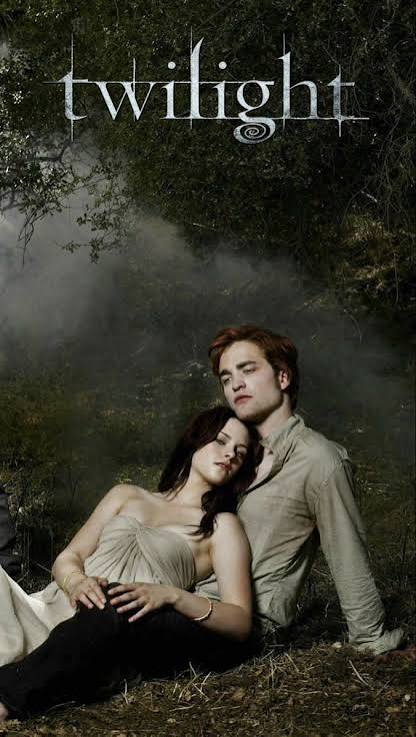
Twilight
Moody, romantic, atmospheric with escalating thriller tension
Based on a publicly circulated draft of this screenplay sourced online — it may differ from the official shooting script or final film. Shown to demonstrate ProofIntelligence.
A shy teenage girl moves to a rain-soaked small town and falls in love with a mysterious classmate who turns out to be a century-old vampire, forcing both to navigate a forbidden romance while a lethal tracker vampire hunts her.
Executive Summary
Twilight is a proven commercial property delivered as a clean, producible shooting draft with clear franchise architecture and a well-defined target demographic. The script's core asset is its forbidden romance engine — a vulnerable human girl and a dangerous vampire boy — which has generated over $3.3 billion in global box office across the franchise, confirming the concept's commercial viability beyond any reasonable doubt. From a production standpoint, the budget is manageable (moderate VFX, practical Pacific Northwest locations, contained cast), and the script seeds four sequels' worth of story threads without sacrificing standalone resolution. The key creative risk is protagonist passivity in Act Three and dialogue that occasionally tells rather than shows, both addressable in a development pass. For an Indian market adaptation, the forbidden-love-across-worlds premise is culturally resonant and the supernatural romance genre has proven theatrical viability — this is a packageable property that needs the right director-lead combination to unlock its full potential.
Why this verdict
Twilight is a competently structured supernatural romance adaptation that hits its genre beats reliably and delivers a clear, commercially potent central love story. The script's greatest asset is its market viability — the built-in IP, the accessible forbidden-love premise, and the YA demographic appeal are undeniable. However, evaluated purely as screenwriting craft against international cinema standards, the dialogue often lacks subtext, the protagonist's agency is limited in the third act, and the originality score reflects that this is a faithful adaptation of well-trodden vampire romance territory rather than a fresh cinematic voice. It's a solid studio product — professional, producible, and audience-tested — but not a script that would turn heads at a development table on craft alone.
Score Breakdown
Casting
Kristen Stewart
as BELLA
Stewart's naturalistic, introverted screen presence and her ability to convey complex internal states through minimal expression make her ideal for Bella's guarded vulnerability. Her work in indie films demonstrates the quiet intensity the role demands.
Robert Pattinson
as EDWARD
Pattinson's angular, unconventionally handsome features and his ability to project both brooding intensity and unexpected warmth match Edward's description perfectly. His background in period drama gives him the 'from a different time' quality the script requires.
Billy Burke
as CHARLIE
Burke's everyman quality and his ability to convey deep emotion through understatement make him perfect for Charlie's taciturn, loving father. His experience in both drama and genre work gives him the range to anchor the script's most emotionally complex scenes.
Ashley Greene
as ALICE
Greene's petite, energetic physicality and her natural warmth match Alice's pixie-like description. Her ability to shift between bubbly enthusiasm and intense seriousness serves the character's dual function as comic relief and prophetic oracle.
Cam Gigandet
as JAMES
Gigandet's lean, predatory physicality and his ability to project casual menace make him a strong fit for James' catlike, sadistic tracker. His martial arts background serves the ballet studio fight choreography.
Pacing & Rhythm
Overall pace
Measured build with strong acceleration in Act Three
The pacing curve follows a well-designed wave pattern — building tension, releasing it through romance, then building again with higher stakes. The script's pace accelerates significantly from the baseball game onward, creating a satisfying thriller momentum in Act Three. The main pacing weakness is the mid-Act Two valley (pages 56-72) where the romance montage scenes, while emotionally pleasant, lack the narrative urgency of the surrounding material. The final prom sequence provides a necessary deceleration after the climax, though the Victoria tease ensures the audience doesn't fully relax.
SLOW · pp. 29–35
The 'Series of Scenes Over Several Days' montage of Edward's absence feels repetitive and static — multiple scenes of Bella looking at an empty chair.
Fix: Consolidate to two scenes maximum. Use the time to deepen Bella's friendships or her investigation rather than repeating the same visual of Edward's empty seat.
SLOW · pp. 56–62
The sequence from Edward's room tour through the tree-jumping to the arrival at school together is pleasant but low-tension, functioning as relationship montage without advancing plot.
Fix: Trim the tree sequence and use the space to plant more specific clues about the nomadic vampires, creating dramatic irony before the baseball game.
RUSHED · pp. 88–92
The transition from Bella receiving James' phone call to escaping Alice and Jasper and arriving at the ballet studio happens extremely quickly with several omitted scenes (121-126).
Fix: Restore at least one scene showing Bella's escape plan forming and her emotional state — the audience needs to feel her terror and determination, not just see the result.
RUSHED · pp. 93–97
The ballet studio fight is dense with action but the choreography reads as a blur of SMASHES and FLINGS. Edward's arrival, the fight, the venom extraction, and the resolution all compress into very few pages.
Fix: Slow down the venom extraction scene — it's the emotional climax. Give Edward's internal struggle more beats and let Bella's POV linger on the choice being made.
Conflict Escalation
The conflict escalation follows a well-designed dual-track structure: the interpersonal tension of the Bella-Edward relationship builds steadily through Act One and Two, while the external threat of the nomadic vampires operates as a parallel track that converges at the baseball game. The script's tension curve is effective but front-loaded with mystery and back-loaded with action, creating a noticeable gear-shift rather than a smooth escalation. The peak moment — Edward sucking venom from Bella's hand — is the script's most dramatically effective scene because it fuses the romantic and thriller tensions into a single impossible choice.
Peak moment · page 95
Edward must suck the venom from Bella's bitten hand to save her from becoming a vampire, but the bloodlust threatens to overwhelm him. Dr. Cullen guides him through it as Bella loses consciousness — the ultimate test of Edward's self-control and love.
Protagonist Arc
Bella's internal arc follows a classic romance trajectory — descent into isolation, gradual ascent through love, catastrophic fall, and recovery at a new equilibrium. Her lowest point is not the physical attack (page 93) but the emotional devastation of hurting Charlie (page 81), which reveals that the script's true emotional stakes are familial rather than romantic. Her arc peaks at the first kiss (page 72) and resolves at a moderate positive — she's found love and belonging but hasn't achieved her ultimate desire (becoming a vampire), leaving the arc deliberately incomplete for the sequel. The weakness is that her internal state in Act Three is almost entirely reactive — things happen TO her rather than her internal growth driving the action.
Scene Audit
35 scenes evaluated — tension, pacing contribution, and whether each earns its place.
| Pg | Scene | Purpose | Tension | Verdict |
|---|---|---|---|---|
| 1 | EXT. RAIN FOREST, OLYMPIC NATIONAL PARK BELLA | Establishes predator POV and Bella's voiceover thesis about dying for loveStrong atmospheric opening; predator POV pays off later. | 25accelerates | essential |
| 2 | EXT. SCOTTSDALE, AZ BELLA · RENE | Establishes Bella's world, her relationship with Rene, and her reluctant departureEfficient setup of Bella's sacrifice and mother dynamic. | 5maintains | essential |
| 5 | INT. POLICE CRUISER BELLA · CHARLIE | Establishes the awkward Bella-Charlie dynamic through painful small talkThe silence speaks volumes; great character work. | 8decelerates | essential |
| 6 | EXT. CHARLIE'S HOUSE BELLA · CHARLIE · JACOB · BILLY | Introduces Jacob, Billy, and the truck — Bella's first genuine smileTruck gift is perfect character beat for Charlie. | 5maintains | essential |
| 7 | INT. HIGH SCHOOL BELLA · ERIC | Establishes Bella as outsider at school, introduces EricSeries of shots format is efficient but generic. | 10maintains | needs_work |
| 9 | INT. CAFETERIA BELLA · JESSICA · ANGELA · ERIC · MIKE · EDWARD | Introduces the Cullens through Jessica's gossip; Bella first sees EdwardThe Cullen entrance is the script's first showstopper. | 30accelerates | essential |
| 11 | INT. BIOLOGY CLASS BELLA · EDWARD | Edward's hostile reaction to Bella's scent — the inciting mysteryVisceral tension; Edward's revulsion is palpable. | 40accelerates | essential |
| 13 | INT. ADMINISTRATION OFFICE BELLA · EDWARD | Edward tries to switch classes; his hate-filled glare terrifies BellaEscalates the mystery; 'I'll just endure it' is chilling. | 35accelerates | essential |
| 14 | INT. GRISHAM MILL JAMES | Establishes the nomadic vampire threat through security guard's deathEffective parallel threat; Unknown POV mirrors opening. | 50accelerates | essential |
| 17 | INT. CAFETERIA BELLA · JESSICA · ANGELA | Shows Edward's continued absence — Bella watches empty Cullen seatRepetitive with scenes 30-31; consolidate to one. | 15decelerates | needs_work |
| 19 | INT. BIOLOGY CLASS BELLA · EDWARD | Edward returns, introduces himself, they do the onion root lab togetherChemistry crackles; the microscope scene is iconic. | 30accelerates | essential |
| 23 | EXT. HIGH SCHOOL PARKING LOT BELLA · EDWARD | Van accident — Edward's superhuman rescue of BellaMajor catalyst; time-fracture technique is cinematic. | 65accelerates | essential |
| 26 | INT. HOSPITAL RECEPTION BELLA · EDWARD · ROSALIE · DR. CULLEN | Bella confronts Edward about how he saved her; he denies everythingStrong confrontation; their proximity is electric. | 45maintains | essential |
| 30 | INT. COMMUNITY COLLEGE GREENHOUSE BELLA · EDWARD · ALICE · JESSICA | Bella pursues Edward; he warns her to stay away but can't help engagingGood content but pacing drags; trim greenhouse tour. | 30maintains | needs_work |
| 33 | INT. CAFETERIA - SALAD BAR BELLA · EDWARD | Apple hackeysack scene; Edward admits he wants to be friends but shouldn'tThe apple catch is a signature visual moment. | 25maintains | essential |
| 36 | EXT. LA PUSH BEACH BELLA · JACOB | Jacob tells Bella the Quileute legend about the Cold OnesCritical exposition delivered through flirtation — smart. | 20decelerates | essential |
| 38 | EXT. SHACK COMMUNITY ON THE RIVER JAMES · VICTORIA · LAURENT | Waylon Forge is killed by the nomadic vampiresIntroduces the villain trio with visceral impact. | 55accelerates | essential |
| 41 | EXT. THUNDERBIRD AND WHALE BOOKSTORE/STREETS BELLA | Bella is followed through Port Angeles streetsEffective suspense; Unknown POV creates real dread. | 50accelerates | essential |
| 41 | EXT. WAREHOUSE BELLA · EDWARD | Frat boys corner Bella; Edward rescues herBella's purse-mace shows resourcefulness before rescue. | 60accelerates | essential |
| 43 | EXT. WATERFALL RESTAURANT - DINING PATIO BELLA · EDWARD | Edward reveals he can read minds and admits he can't stay away from BellaKey revelations but dialogue is too on-the-nose. | 30maintains | needs_work |
| 47 | INT. POLICE STATION BELLA · CHARLIE | Bella comforts Charlie over Waylon's death — first physical affection between themEmotional turning point for father-daughter bond. | 25decelerates | essential |
| 49 | EXT. FOREST BELLA · EDWARD | Bella confronts Edward with everything she knows; he confirms he's a vampireThe circling camera technique is powerful and cinematic. | 55accelerates | essential |
| 52 | EXT. A MEADOW BELLA · EDWARD | Edward reveals his sparkling skin; they declare their loveEmotional centerpiece of the film; lion/lamb exchange. | 40maintains | essential |
| 62 | INT. CULLEN HOUSE - KITCHEN BELLA · EDWARD · ESME · DR. CULLEN · ROSALIE · EMMETT | Bella meets the Cullen family; Rosalie's hostility creates tensionComedy and tension balanced well; Italian cooking is fun. | 35maintains | essential |
| 65 | INT. EDWARD'S ROOM BELLA · EDWARD | Edward shows Bella his room; they bond over music and DebussyPleasant but low-stakes; could be trimmed for pacing. | 15decelerates | needs_work |
| 70 | INT. BELLA'S ROOM BELLA · EDWARD | Edward appears in Bella's room; they share their first kissFirst kiss scene is well-calibrated — desire vs. danger. | 40maintains | essential |
| 74 | EXT. CLEARING IN WOODS BELLA · EDWARD · ALICE · JASPER · ROSALIE · EMMETT · ESME · DR. CULLEN · JAMES · VICTORIA · LAURENT | Baseball game interrupted by nomadic vampires; James catches Bella's scentMajor turning point; genre shifts from romance to thriller. | 75accelerates | essential |
| 79 | INT. CHARLIE'S HOUSE - LIVING ROOM BELLA · CHARLIE · EDWARD | Bella stages a devastating fake breakup to flee Forks and protect CharlieScript's most emotionally complex scene; devastating. | 70accelerates | essential |
| 82 | INT. CULLEN HOUSE - FOUR CAR GARAGE BELLA · EDWARD · ALICE · JASPER · ROSALIE · EMMETT · DR. CULLEN · ESME | The Cullens plan their defense; Rosalie objects; Edward says goodbye to BellaEfficient war-room scene; 'You're my life now' lands. | 65accelerates | essential |
| 86 | INT. SCOTTSDALE HOTEL - LIVING ROOM BELLA · ALICE · JASPER | Alice has a vision of the ballet studio; Jasper reveals Edward's isolationJasper's 'hundred years' line is the scene's highlight. | 60maintains | essential |
| 89 | INT. RENE'S HOUSE, PHOENIX BELLA · JAMES | James calls Bella using her mother's phone, threatening Rene's lifeTerrifying phone call; James' sadism is chilling. | 90accelerates | essential |
| 91 | INT. MIMI'S SCHOOL OF DANCE - STUDIO BELLA · JAMES · EDWARD · DR. CULLEN · ALICE · EMMETT · JASPER | Ballet studio confrontation — James attacks Bella, Edward fights him, venom extractionClimactic sequence; venom extraction is the emotional peak. | 100accelerates | essential |
| 97 | INT. HOSPITAL ROOM BELLA · RENE · EDWARD | Bella recovers; Rene visits; Edward and Bella reconcileWarm resolution; Rene's 'that boy is in love' is sweet. | 15decelerates | essential |
| 100 | EXT. CHARLIE'S HOUSE BELLA · CHARLIE · EDWARD | Charlie reluctantly sends Bella off to prom with EdwardCharlie's pepper spray callback is perfect character beat. | 10maintains | essential |
| 100 | EXT. MANSION BACKYARD - THE PROM BELLA · EDWARD · ALICE · JASPER · ROSALIE · EMMETT · JESSICA · MIKE · ERIC · ANGELA · VICTORIA | Prom resolution — Bella asks Edward to turn her; Victoria watches from aboveSatisfying wrap with sequel tease; Victoria shot is effective. | 35decelerates | essential |
Beat Sheet · Save The Cat
The script adheres closely to the Save the Cat beat sheet with all fifteen beats present and generally well-placed. The strongest beats are the Catalyst (van rescue), Midpoint (meadow scene), and All Is Lost (fake breakup with Charlie) — these are the script's most dramatically effective moments. The weakest beat is Break Into Three, where Bella's decision to go to the ballet studio is reactive (responding to James' threat) rather than proactive, diminishing her agency at the story's most critical juncture. The Setup runs slightly long and the Debate section could be tighter, but overall the structural architecture is solid and commercially reliable.
| Beat | Expected | Actual | Present | Quality |
|---|---|---|---|---|
Opening Image Predator POV hunting through the rain forest, establishing the dangerous supernatural world; Bella's voiceover about dying for love | p. 1 | p. 1 | 80 | |
Theme Stated Bella's voiceover: 'Dying in the place of someone I love seems like a good way to go' — self-sacrifice as the thematic core | p. 5 | p. 3 | 70 | |
Setup Bella moves from Scottsdale to Forks, establishes relationships with Charlie, school friends, and first encounters with the Cullens | p. 10 | p. 2 | 75 | |
Catalyst Edward saves Bella from the van crash with superhuman speed and strength, shattering her understanding of reality | p. 12 | p. 24 | 85 | |
Debate Bella confronts Edward at the hospital; he denies everything. She debates whether to pursue the truth or let it go. Edward's absence intensifies her obsession. | p. 15 | p. 27 | 70 | |
Break Into Two Edward returns to school and engages with Bella; she commits to investigating his secret rather than avoiding him | p. 25 | p. 33 | 65 | |
B Story Jacob tells Bella the Quileute legend at La Push beach, providing the key to understanding the Cullens and seeding the sequel's central relationship | p. 30 | p. 36 | 75 | |
Fun and Games The restaurant scene, the Port Angeles rescue, the online research, the forest confrontation, the meadow reveal — the 'promise of the premise' as Bella discovers Edward's vampire nature and they fall in love | p. 35 | p. 43 | 80 | |
Midpoint The meadow scene — Edward reveals his sparkling skin, they declare their love, 'the lion fell for the lamb.' Stakes shift from mystery to committed relationship. | p. 55 | p. 52 | 85 | |
Bad Guys Close In The nomadic vampires' threat grows closer — bare footprints at the crime scene, Billy's warnings, and finally James catching Bella's scent at the baseball game | p. 65 | p. 68 | 75 | |
All Is Lost Bella must destroy her relationship with Charlie to save his life, echoing her mother's abandonment — the emotional low point | p. 75 | p. 81 | 90 | |
Dark Night of the Soul Bella hides in the Scottsdale hotel, separated from Edward, terrified for her family, feeling responsible for the danger she's brought on everyone | p. 80 | p. 86 | 70 | |
Break Into Three James calls threatening Rene — Bella decides to go to the ballet studio alone, choosing self-sacrifice over safety | p. 85 | p. 89 | 65 | |
Finale Ballet studio confrontation — James attacks, Edward fights, the venom extraction forces Edward to prove his love through ultimate self-control | p. 90 | p. 91 | 80 | |
Final Image Victoria watches from above the prom, seething with vengeance — the world has changed, the danger is not over, but Bella and Edward dance together | p. 103 | p. 103 | 75 |
What's Working
Proven Commercial Formula
The forbidden romance between a vulnerable human and a dangerous supernatural being is one of the most commercially reliable story engines in popular fiction. The script executes this formula with clarity and emotional commitment, never losing sight of the central love story even as thriller elements escalate.
Charlie Swan — Emotional Depth
The father-daughter relationship between Bella and Charlie is the script's most nuanced and emotionally rewarding thread. Charlie's taciturn love, expressed through new tires and pepper spray rather than words, gives the story genuine human stakes that ground the supernatural elements. The fake breakup scene is devastating precisely because this relationship has been so carefully built.
Atmospheric World-Building
The script creates a vivid, immersive sense of place — the rain-soaked forests, the small-town claustrophobia of Forks, the contrast with Scottsdale's sun. The aerial transitions and weather-as-mood-device are cinematic and effective. The Cullen house, the meadow, and the baseball field are all visually distinctive set pieces.
Franchise Architecture
The script expertly seeds sequel elements — Victoria's final appearance, Jacob's Quileute heritage, Alice's vision of Bella as a vampire, the unresolved question of Bella's transformation — without sacrificing the standalone story's resolution. This is textbook franchise setup.
Efficient Supporting Cast
The high school ensemble (Jessica, Angela, Eric, Mike) and the Cullen family are each given just enough characterization to feel distinct and alive without overwhelming the central romance. Jessica's gossip, Angela's sweetness, and Emmett's brawny humor all land in minimal screen time.
What to Fix
Protagonist Passivity
Bella's agency diminishes significantly as the script progresses. In Act One, she actively investigates Edward. In Act Two, she confronts him. But in Act Three, she is lured by James, attacked, and rescued by Edward. Her one active choice — going to the ballet studio alone — is motivated by a deception rather than a strategic decision. Modern audiences expect more from their female leads.
On-the-Nose Dialogue
Much of the Edward-Bella dialogue states emotions and exposition directly rather than through subtext. Lines like 'I don't have the strength to stay away from you anymore' and 'You're my life now' tell us what the characters feel rather than showing it through behavior and implication. The script's best dialogue moments (Charlie's scenes, Bella's dry humor) demonstrate the writer can do better.
Late-Arriving Antagonist
James doesn't become a direct threat until the baseball game on approximately page 76 of a 103-page script. The earlier vampire attacks (security guard, Waylon) build atmosphere but aren't connected to the protagonists until very late. This means the thriller plot feels bolted onto the romance rather than organically intertwined with it.
Limited Originality
As a faithful adaptation of a massively popular novel, the script doesn't bring a fresh cinematic perspective to the material. The vampire mythology (vegetarian vampires, sparkling skin, mind-reading) is distinctive within the genre but is entirely sourced from the novel. The screenplay craft — shot choices, scene construction, dialogue — is professional but not distinctive enough to elevate the material beyond its source.
Romanticized Controlling Behavior
Edward's behavior — watching Bella sleep without consent, following her, making decisions for her, his volatile mood swings — is framed as romantic rather than examined critically. While this is faithful to the source material, it represents a market risk with contemporary audiences who are more attuned to these dynamics.
Rewrite priorities
Give Bella a plan when she goes to the ballet studio. Perhaps she leaves clues for Alice, or she has a strategy to delay James until help arrives. Let her pepper spray attack be the beginning of a sequence of resourceful actions, not a single futile gesture.
Issue: Bella becomes almost entirely passive in Act Three — she is deceived, attacked, and rescued without making meaningful strategic choices
Rewrite key romantic exchanges to show feelings through behavior and reaction rather than declaration. Instead of 'I don't have the strength to stay away from you anymore,' show Edward doing something that reveals this — returning an object, appearing somewhere unexpected, making a sacrifice.
Issue: Edward-Bella conversations frequently state emotions directly rather than through subtext, particularly in the restaurant scene and meadow scene
Add earlier moments where James' presence is felt by the protagonists — perhaps Edward senses something wrong during one of their dates, or Bella notices bare footprints near Charlie's house. Create dramatic irony by letting the audience connect the Waylon murder to the Cullens' world earlier.
Issue: James doesn't become a direct threat to the protagonists until page 76, making the thriller plot feel disconnected from the romance for most of the script
Consolidate Edward's absence to one powerful scene. In the romance montage, replace one 'another day' scene with a scene that advances the threat plot or deepens Bella's relationship with Charlie, creating contrast with what she's about to lose.
Issue: The montage of Edward's absence (scenes 29-31) and the post-meadow romance montage (scenes 73-75) both sag with repetitive beats
Give Victoria one scene where she demonstrates intelligence or emotional depth — perhaps a moment with James that shows their bond, making her desire for vengeance feel personal rather than generic.
Issue: Victoria has almost no characterization beyond 'red hair' and 'sinister' — her final-shot tease lacks weight because we don't know her as a character
Biggest improvement lever
Increase Bella's agency in Act Three. Instead of being passively lured to the ballet studio by James' deception, give Bella a moment where she actively chooses to confront the danger with a plan — even a flawed one. Let her pepper spray attack on James be part of a larger strategy rather than a desperate last resort. This single change would address the protagonist passivity issue, make the climax more dramatically satisfying, and modernize the script's gender dynamics without fundamentally altering the plot.
Emotional Rhythm
The emotional rhythm follows a classic romance pattern — oscillating between attraction and fear in Acts One and Two, then plunging into sustained negative territory in Act Three before a cathartic resolution. The script's emotional high point is the meadow scene (page 55), and its emotional low point is the fake breakup with Charlie (page 81), which is notably more devastating than the physical danger of the ballet studio. This suggests the script's emotional core is actually the family relationships rather than the romance — a strength the script could lean into more. The prom resolution provides a satisfying emotional uplift, though the Victoria tease prevents full catharsis.
Act Structure
Act One
pp. 1–28Bella Swan moves from sunny Scottsdale to rainy Forks, Washington to live with her father Charlie. She navigates a new school, makes friends, and encounters the mysterious Cullen family. Edward Cullen's bizarre hostility toward her, followed by his superhuman rescue of her from a van accident, sets the central mystery and attraction in motion.
Key turning point
Edward saves Bella from the van crash, revealing superhuman abilities and catalyzing her obsessive need to understand him.
Act One is well-paced and efficiently establishes Bella's fish-out-of-water status, the Forks world, and the Cullen mystery. The van rescue is a strong catalyst that arrives at the right structural moment. The weakness is that Bella's interiority is mostly conveyed through voiceover rather than dramatized action, making her somewhat passive in her own setup.
Act Two
pp. 28–78Bella investigates the Cullen legend, confronts Edward in the forest where he reveals he is a vampire, and they begin a forbidden romance. She visits the Cullen house, meets the family, and their relationship deepens. The parallel threat of nomadic vampires James, Victoria, and Laurent is established through the murders of a security guard and Waylon Forge. The baseball game brings the two worlds crashing together when James catches Bella's scent.
Key turning point
At the baseball game, James identifies Bella as prey, transforming the romance into a survival thriller and forcing the Cullens into a protective formation.
Act Two is the script's strongest section, balancing the romance escalation with effective worldbuilding and a well-timed pivot to danger. The meadow scene is the emotional centerpiece and works well. The B-story with Charlie deepens nicely. However, the middle section between the meadow reveal and the baseball game sags slightly with repetitive 'another day' montage scenes that could be tighter.
Act Three
pp. 78–103Bella stages a painful breakup with Charlie to flee Forks. The Cullens split up to protect her and hunt James. James lures Bella to a ballet studio in Phoenix by threatening her mother. Edward arrives for a brutal confrontation, and Dr. Cullen must guide Edward through sucking the venom from Bella's hand without killing her. Bella recovers in the hospital, and the story resolves at prom with the lingering threat of Victoria.
Key turning point
Edward must choose between letting Bella become a vampire or risking killing her by sucking out the venom — the ultimate test of his self-control and love.
Act Three delivers genuine stakes and an emotionally charged climax. The fake breakup with Charlie is the script's most emotionally complex scene. However, Bella's agency diminishes significantly — she is lured, attacked, and rescued, functioning more as an object of protection than an active protagonist. The resolution at prom is charming but the Victoria tease feels obligatory rather than organic.
Midpoint · page 52
Bella confronts Edward in the forest, he reveals he is a vampire, and they acknowledge their mutual attraction in the meadow — transforming the story from mystery to committed forbidden romance.
This is a strong, well-executed midpoint that fundamentally shifts the story's stakes from 'what is Edward?' to 'can this relationship survive what he is?' The meadow scene is visually distinctive and emotionally charged. It effectively raises the stakes by making the danger personal and intimate rather than abstract.
Character Analysis
Protagonist · arc 60/100
BELLA
want
To understand and be with Edward despite the danger he represents
need
To find belonging and self-worth after a lifetime of being the responsible adult in her family
flaw
Self-sacrificing to the point of recklessness; defines herself through others rather than asserting her own identity
Bella is a functional protagonist whose relatability comes from her vulnerability and dry humor rather than from active choices. She drives the investigation in Act Two effectively, but in Act Three she becomes almost entirely reactive — lured by James, rescued by Edward. Her voiceover carries emotional weight but substitutes for dramatized interiority. The script's biggest character weakness is that Bella's arc is more about what happens TO her than what she DOES.
Antagonist · threat 82/100
JAMES
James is an effective late-arriving antagonist whose sadistic theatricality (the video camera, the ballet studio setting) elevates him above a generic threat. His introduction through the security guard and Waylon sequences builds dread before he's even named. However, he arrives too late in the script to develop real dimensionality — he's a plot mechanism more than a character. His motivation (the thrill of the hunt) is clear but thin.
Supporting cast
22 characters · 8 distinct voicesThe supporting cast is functional and well-differentiated within their archetypes. Jessica's motor-mouth gossip, Angela's quiet sweetness, Eric's eager-beaver energy, and Mike's puppy-dog crush all create a believable high school ecosystem. The Cullen family members are efficiently sketched — Emmett's brawny humor, Esme's maternal warmth, Jasper's tortured restraint. The weakness is that most supporting characters serve single functions and don't surprise us beyond their initial introductions. Charlie and Jessica are the standouts for having the most distinct and memorable voices.
Character Presence
Screen presence by act; total scene count on the right.
Dialogue
Subtext
Voice
Density: High — dialogue-heavy script with extensive conversation scenes driving both romance and exposition
The dialogue is serviceable and occasionally sharp, particularly in Bella's dry humor and the Charlie-Bella exchanges. The lion/lamb exchange has become iconic for good reason — it's economical and emotionally resonant. However, much of the Edward-Bella dialogue is on-the-nose, with characters stating their feelings directly rather than through subtext. Edward's exposition about vampire lore is handled through straightforward Q&A rather than dramatized revelation. The high school friends have distinct enough voices (Jessica's gossip, Eric's eagerness) but they're one-note. The script's dialogue works best in its quieter moments — Charlie reaching for the salt, Bella noticing the new tires — where what's unsaid carries more weight than what's spoken.
The script is dialogue-heavy overall, which is appropriate for a romance-driven narrative. Act Two is the most dialogue-dense, with extended conversation scenes (restaurant, meadow, Cullen house) carrying the emotional and expository weight. Act Three shifts dramatically toward action, with the ballet studio fight and chase sequences dominating. The description percentage is highest in Act One, where the Pacific Northwest setting and school environment require establishment. The balance works for the genre — the shift from talk to action in Act Three creates a satisfying gear change — though some Act Two conversations could be tightened.
Notable lines
“Like watch more baseball on the flat screen? Or go to the Coffee Shop? Same people, same steak, same berry cobbler every night? That's you, Dad. Not me.”
BELLA · page 81
Devastating because it weaponizes the intimate details we've watched them build together — the cobbler, the routine. It's the script's most emotionally complex moment.
“And so the lion fell for the lamb.”
EDWARD · page 55
Iconic line that crystallizes the power dynamic and danger of the relationship in a single metaphor. Earns its place through the meadow scene's buildup.
“I'm kind of the 'suffer in silence' type.”
BELLA · page 7
Efficiently establishes Bella's character — self-aware, dry, introverted — in a single line of dialogue that also functions as comedy.
“None of us want to look into his eyes for the next hundred years if he loses you.”
JASPER · page 86
The most effective line from a supporting Cullen — it conveys the weight of immortality and Edward's isolation in one practical, emotionally resonant statement.
Lines to fix
“I'm on a special diet.”
EDWARD · page 43
Too cute and winking for a character who is supposedly tormented. It breaks the tension of the dinner scene. Consider a more evasive, less jokey deflection.
“Always the same inane questions...”
JAMES · page 38
Generic villain dialogue that tells us James is bored rather than showing it. His menace would be stronger with silence or a more specific, unsettling line.
“Yes, no. To get to the other side, and 1 point 772453851.”
EDWARD · page 44
The rapid-fire joke answers feel forced and sitcom-adjacent. Edward's humor works better when it's dry and understated, not when he's doing a comedy bit.
“Radioactive spiders? Kryptonite?”
BELLA · page 34
The pop culture references feel like they belong in a different, more self-aware script. They undercut the grounded, atmospheric tone the screenplay has been building.
Market & Audience
This script sits in an extremely well-proven commercial sweet spot — YA supernatural romance with a massive built-in fanbase. In the Indian context, the forbidden-love-across-worlds premise maps directly onto successful formulas (think supernatural elements in Raaz, 1920, or the cross-community romance tension of countless Bollywood hits). The budget is manageable — the VFX requirements are specific but not overwhelming (speed effects, sparkling skin, the baseball game). The primary risk is that the Twilight IP is so well-known that any adaptation must contend with audience expectations and potential fatigue. As a new IP with this same structure, it would still be commercially viable but would need a stronger hook.
Audience
Young adults (13-25), predominantly female, with crossover appeal to romance and fantasy audiences of all ages
Budget band
mid (₹15-25Cr equivalent — moderate VFX for vampire speed/sparkle effects, practical locations, limited cast)
Trend
Supernatural romance has proven cyclical but the YA adaptation pipeline remains commercially viable, especially with built-in IP recognition. The trend toward darker, more grounded fantasy (Wednesday, Shadow and Bone) suggests the market has matured since Twilight's original release.
Platforms
Theatrical (wide release) · OTT (streaming platform anchor title) · Television (series adaptation potential)
The script's primary audience is young adults, particularly young women aged 13-25, who respond to the forbidden romance, the outsider protagonist, and the fantasy wish-fulfillment of being chosen by an extraordinary being. The OTT/streaming appeal is strong due to the binge-worthy franchise structure and the intimate, character-driven storytelling that works well on smaller screens. Mass/commercial appeal is solid but limited by the romance-first approach — male audiences may be less engaged. Critics/festival appeal is low, as the script prioritizes genre satisfaction over artistic ambition. Family appeal is moderate — the content is age-appropriate but the intense romance and vampire violence may not suit younger children or conservative family viewing.
Risks · Low-Moderate
- • IP fatigue — Twilight has been extensively adapted and parodied, making fresh audience engagement challenging
- • Vampire romance genre has been heavily saturated since the original film's release
- • Protagonist passivity in Act Three may draw criticism from modern audiences expecting more agency from female leads
- • The sparkle-in-sunlight vampire mythology is polarizing and has been widely mocked
Mitigations
- • Massive built-in fanbase ensures baseline audience
- • The romance-first approach differentiates from horror-heavy vampire properties
- • Strong ensemble cast potential attracts talent
- • The script's atmospheric Pacific Northwest setting is visually distinctive and production-friendly
- • Sequel-ready structure with Victoria tease ensures franchise potential
Investment Case
Franchise Potential
franchise ready- Victoria's vengeance arc — explicitly set up in the final shot
- Jacob Black and the Quileute werewolf mythology
- Bella's desire for vampire transformation — the central unresolved question
- The Volturi and the wider vampire political world
- Alice's prophetic visions as narrative engine
This script is textbook franchise architecture. Every major sequel thread is planted organically within the standalone story: Victoria's survival and vengeance motivation, Jacob's Quileute heritage and its supernatural implications, Bella's unresolved desire for transformation, and Alice's prophetic visions. The script resolves its immediate conflict (James) while leaving the larger questions (Bella's mortality, Victoria's revenge, the treaty's fragility) open. The world-building is rich enough to sustain multiple entries without feeling exhausted.
International Viability
The script's universal themes of forbidden love and outsider belonging give it broad international appeal, proven by the source material's global success. The cultural specificity of Forks and American high school is a minor barrier but the emotional core transcends geography. In the Indian market, the forbidden-love-across-worlds premise maps onto deeply familiar storytelling traditions.
Strong markets: North America, Europe (UK, France, Germany), Latin America, Southeast Asia, India (forbidden love resonates deeply)
Cultural barriers: Very specifically American Pacific Northwest setting and high school culture; Vampire mythology carries different cultural weight across markets; The sparkling vampire concept has been widely parodied; YA romance tone may not translate to markets preferring mature romantic storytelling
Investment Readiness
low riskReady for packagingThis is a low-risk investment proposition with proven IP, a clear target demographic, and manageable production requirements. The script is production-ready with specific, achievable locations and moderate VFX needs. The primary consideration is IP licensing cost versus built-in audience guarantee. The commercial floor is high even if the ceiling depends on execution and casting.
Attachment suggestions
- • A director with proven YA/romance sensibility and strong visual style
- • A young female lead with vulnerability and quiet strength
- • A male lead with brooding intensity who can balance menace with tenderness
- • A strong character actor for Charlie — the emotional anchor role
- • A VFX supervisor experienced in subtle, integrated effects
Comparable Films
Let the Right One In (2008)
Shares the core dynamic of a lonely outsider forming a bond with a vampire, grounded in atmospheric small-town isolation and adolescent vulnerability rather than action spectacle.
Bram Stoker's Dracula (1992)
The romantic framing of the vampire as a tragic, centuries-old lover who is both dangerous and irresistible to the human protagonist echoes this script's central tension.
Ek Villain (2014)
A Bollywood parallel in how a dangerous male lead's obsessive love for a gentle female lead drives the narrative, with the romance functioning as both the emotional core and the source of peril.
The Hunger (1983)
Stylistic kinship in using vampirism as a metaphor for desire, immortality, and the cost of eternal love, with heavy emphasis on mood and visual atmosphere over horror.
Cinema DNA
The directorial sensibilities this script most resembles, weighted by influence.
✦Your Cinema DNA
Hardwicke's grounded, naturalistic approach to teen emotion and her ability to find raw beauty in mundane settings directly shaped this script's visual and tonal DNA — unsurprising as she directed the film.
The script shares Imtiaz Ali's signature preoccupation with a young woman's journey of self-discovery through a transformative romantic relationship, set against atmospheric landscapes that mirror internal emotional states.
The script's treatment of dangerous, aesthetically beautiful predators and its fusion of romance with visceral body horror echoes Park Chan-wook's Thirst — both find eroticism in the vampire's struggle between desire and destruction.
The verdict, in full
Twilight is a professionally crafted supernatural romance adaptation that faithfully translates Stephenie Meyer's novel into a producible screenplay with clear commercial appeal. The script's greatest strengths are its atmospheric Pacific Northwest setting, the emotionally resonant father-daughter relationship between Bella and Charlie, and its efficient franchise architecture that seeds sequels without sacrificing standalone resolution. The central forbidden romance between Bella and Edward hits its genre beats reliably, with the meadow revelation scene and the venom extraction climax serving as effective emotional peaks. However, the script suffers from protagonist passivity in its third act, on-the-nose romantic dialogue that tells rather than shows, and a late-arriving antagonist whose threat feels bolted onto the romance rather than organically intertwined. Evaluated against international cinema standards, this is competent studio work — a reliable commercial product that would benefit from a rewrite pass focused on Bella's agency, dialogue subtext, and earlier antagonist integration.
Your screenplay deserves this.
Every section you just read — scores, cast, pacing curves, scene-by-scene audit, market read, and a producer-ready verdict — generated for your script in minutes.
Registered with tamper-proof timestamps · Yours alone
Analysis of a publicly available draft of this screenplay sourced online. It may differ from the official shooting script or final film. Shown to demonstrate ProofIntelligence — not an official or licensed screenplay.