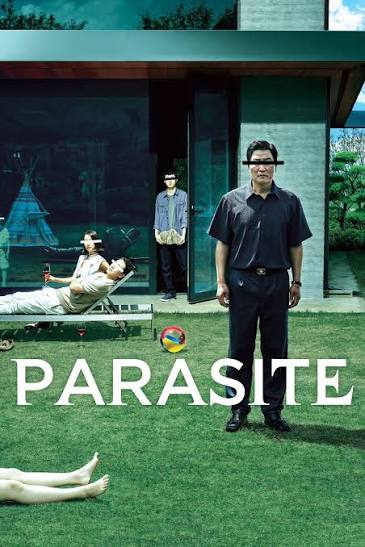
Parasite
Darkly comic, escalating to suspenseful and devastating — a tonal tightrope between absurdist humor and gut-punch tragedy
Based on a publicly circulated draft of this screenplay sourced online — it may differ from the official shooting script or final film. Shown to demonstrate ProofIntelligence.
A destitute family of four con artists infiltrates a wealthy household by posing as unrelated workers, only to discover a far darker secret hidden beneath the mansion — triggering a catastrophic collision of class, desperation, and violence.
Executive Summary
Parasite is a once-in-a-generation screenplay that operates as both a crowd-pleasing genre film and a devastating social commentary — the rare project that can premiere at Cannes and still gross ₹2,000Cr+ worldwide. The contained production design (one mansion, one semi-basement, limited locations) keeps the budget at a manageable ₹15-25Cr equivalent while the ensemble cast provides multiple star-vehicle opportunities across four distinct roles. The class-infiltration premise is inherently high-concept and pitchable ('a poor family cons their way into a rich family's household — then discovers someone was there first'), while the execution delivers the kind of shocking twists and emotional devastation that generate massive word-of-mouth. This is a low-risk, high-reward investment with proven global appeal across theatrical, festival, and OTT platforms.
Why this verdict
This is an exceptionally crafted screenplay that operates on multiple levels — as a darkly comic thriller, a class satire, and a devastating family tragedy. The structural precision is remarkable, with every planted detail (the viewing stone, the peach allergy, the smell, the motion-sensor lights) paying off with devastating efficiency. The script earns its tonal shifts from comedy to horror to tragedy through meticulous setup and character work. By any international standard, this is elite-level screenwriting that justifies its Palme d'Or and Academy Award recognition.
Score Breakdown
Casting
Song Kang-ho
as KI-TEK
Song Kang-ho's extraordinary range — from the bumbling everyman of Memories of Murder to the desperate father of The Host — makes him the definitive choice for Ki-Tek's journey from serene passivity to explosive violence. His ability to be simultaneously comic and tragic, pathetic and dignified, is unmatched in Korean cinema.
Jang Hye-jin
as CHUNG-SOOK
Jang Hye-jin's physical presence and no-nonsense screen persona perfectly embody Chung-Sook's former-athlete toughness and blunt pragmatism. Her ability to deliver cutting humor with a deadpan face while conveying deep maternal protectiveness makes her ideal for the role's tonal demands.
Choi Woo-shik
as KI-WOO
Choi Woo-shik's youthful charm and ability to project both intelligence and vulnerability make him perfect for Ki-Woo's arc from confident schemer to traumatized survivor. His naturalistic acting style grounds the character's increasingly unhinged behavior in the third act.
Park So-dam
as KI-JUNG
Park So-dam's chameleon-like ability to shift between cold authority (as Jessica) and raw vulnerability (the whiskey scene outburst) is essential for Ki-Jung's dual nature. Her sharp, angular features and intense gaze convey both the character's intelligence and her suppressed pain.
Lee Sun-kyun
as DONG-IK
Lee Sun-kyun's natural elegance and warm baritone voice make him ideal for Dong-Ik's effortless privilege — a man who is genuinely likeable yet unconsciously cruel. His ability to play charm and obliviousness simultaneously is crucial for the character's function as a sympathetic antagonist.
Cho Yeo-jeong
as YON-KYO
Cho Yeo-jeong's comedic timing and ability to play guileless naivety without caricature make her perfect for Yon-Kyo's combination of genuine kindness and class blindness. Her expressive face can shift from ditzy enthusiasm to maternal terror in an instant.
Park Myung-hoon
as KUN-SAE
Park Myung-hoon's ability to oscillate between pitiable vulnerability and terrifying mania is essential for Kun-Sae's role as both a sympathetic victim and the agent of catastrophe. His physical expressiveness — the nervous laughter, the head-banging — requires a performer comfortable with extreme physicality.
Pacing & Rhythm
Overall pace
Masterfully calibrated — deliberate buildup accelerating to breathless climax
The pacing curve follows a brilliant double-peak structure. The first peak (pages 42-55) corresponds to the Belt of Trust infiltration montage, which plays with heist-film energy. A deliberate valley follows (pages 55-70) as the family enjoys their success, lulling both characters and audience into false security. The second peak (pages 72-100) is the screenplay's sustained masterpiece of tension — from Mun-Kwang's doorbell through the bunker discovery, the phone standoff, the Parks' return, and the hide-and-seek, the pace barely drops below 80 for nearly 30 pages. The flood provides a necessary deceleration before the final explosive peak at the garden party. The epilogue's slower pace mirrors Ki-Woo's dissociated mental state.
SLOW · pp. 60–70
The whiskey-drinking scene in the living room runs long with extended family banter about rich people and Ki-Woo's relationship with Da-Hae.
Fix: This is intentional — the scene builds false comfort before the doorbell shatters it. However, a few exchanges about wedding actors could be trimmed by 1-2 pages without losing the effect.
RUSHED · pp. 130–141
The epilogue covers Ki-Woo's recovery, trial, Ki-Jung's death, the detective surveillance, the Morse code discovery, and the fantasy sequence in rapid succession.
Fix: The compression is largely effective for emotional impact, but the Morse code deciphering sequence could benefit from one additional beat showing Ki-Woo's emotional reaction to the letter's content before launching into his fantasy plan.
Conflict Escalation
The conflict escalation follows a brilliant double-wave pattern. The first wave builds steadily through the infiltration scheme (pages 10-55), peaks with the Mun-Kwang firing, then deliberately drops during the whiskey scene to create a false sense of security. The second wave detonates with Mun-Kwang's return and escalates relentlessly through the bunker discovery, the Parks' return, the hide-and-seek, and the flood — with only brief valleys before the catastrophic garden party climax. The screenplay's genius is in making the audience complicit in the Kims' scheme during the first wave, then pulling the rug out in the second.
Peak moment · page 126
Kun-Sae stabs Ki-Jung at Da-Song's birthday party, triggering a chain reaction: Da-Song's seizure, Chung-Sook's fight with Kun-Sae, and Ki-Tek's murder of Dong-Ik — all converging in a single devastating sequence of violence that destroys both families.
Protagonist Arc
Ki-Tek's arc is a masterful tragedy of accumulated humiliation. His internal state follows a clear pattern: a brief rise during the infiltration's success (peaking around page 50), followed by a relentless descent triggered by the smell motif and the bunker discovery. The crucial insight is that Ki-Tek's breaking point isn't a single event but a cumulative weight — each microaggression (the hand-washing comment, the smell discussion, the costume humiliation) adds another crack until Dong-Ik's reflexive nose-holding over Kun-Sae's body shatters him completely. His final state in the bunker is the darkest possible irony: the man who preached 'no plan' is now trapped in the same underground prison as the man he replaced, performing the same light-switch ritual for a new family above.
Scene Audit
40 scenes evaluated — tension, pacing contribution, and whether each earns its place.
| Pg | Scene | Purpose | Tension | Verdict |
|---|---|---|---|---|
| 2 | INT. SEMI-BASEMENT KI-WOO · KI-JUNG · CHUNG-SOOK · KI-TEK | Establishes family's poverty, dynamics, and resourcefulness through Wi-Fi huntPerfect opening — poverty made visceral and comic simultaneously | 20accelerates | essential |
| 3 | INT. SEMI-BASEMENT KI-WOO · KI-JUNG · KI-TEK · CHUNG-SOOK | Pizza box folding establishes economic desperation and fumigation fog creates iconic imageFumigation fog is poignant visual metaphor for family's condition | 15maintains | essential |
| 4 | INT/EXT. SEMI-BASEMENT ENTRANCE CHUNG-SOOK · PIZZA SHOP OWNER · KI-WOO · KI-JUNG | Shows Ki-Woo's persuasive abilities and sets up his employment arcKi-Woo's con skills demonstrated — foreshadows the Park scheme | 25accelerates | essential |
| 6 | INT. SEMI-BASEMENT KI-TEK · KI-WOO · KI-JUNG · CHUNG-SOOK | Family dinner establishes dynamics; viewing stone introduced; Min-Hyuk arrivesViewing stone introduction — Chekhov's gun that fires in Act 3 | 15maintains | essential |
| 10 | EXT. NEIGHBORHOOD STORE KI-WOO · MIN-HYUK | Catalyst scene — Min-Hyuk proposes the tutoring job and reveals Da-HaeInciting incident delivered with natural exposition | 30accelerates | essential |
| 12 | INT. INTERNET CAFÉ KI-WOO · KI-JUNG | Ki-Jung forges enrollment certificate — establishes her skillsKi-Jung's talent for forgery sets up her later performances | 25accelerates | essential |
| 14 | EXT. MANSION GATE / INT. MANSION KI-WOO · MUN-KWANG · YON-KYO | Ki-Woo enters the Park world — class contrast established through architectureVertical geography introduced — the hill, the gate, the garden | 35accelerates | essential |
| 17 | INT. MANSION - DA-HAE'S ROOM KI-WOO · DA-HAE · YON-KYO | Ki-Woo's tutoring performance wins over Yon-Kyo — the con succeedsPulse-taking moment is brilliant — seduction disguised as pedagogy | 45accelerates | essential |
| 19 | INT. MANSION - KITCHEN KI-WOO · YON-KYO · MUN-KWANG · DA-SONG | Ki-Woo gets hired; Da-Song introduced; Ki-Woo plants seed for Ki-JungDa-Song's art and behavior set up multiple later payoffs | 30maintains | essential |
| 22 | EXT. MANSION GARDEN KI-WOO · YON-KYO | Ki-Woo recommends 'Jessica' — the infiltration scheme expandsThe con escalates from individual to family operation | 35accelerates | essential |
| 23 | INT. HAIR SALON KI-WOO · KI-JUNG · CHUNG-SOOK · KI-TEK | Family discusses the scheme — 'she's a believer' establishes Yon-Kyo as markFamily conspiracy solidifies — shared excitement is infectious | 25maintains | essential |
| 27 | INT. MANSION - DA-SONG'S ROOM KI-JUNG · YON-KYO · DA-SONG | Ki-Jung's art therapy con — the 'schizophrenia zone' performanceKi-Jung's masterful manipulation — comedy and cruelty intertwined | 40accelerates | essential |
| 32 | INT. DONG-IK'S CAR KI-JUNG · YUN | Ki-Jung plants underwear in the Mercedes — framing YunUnderwear plant is audacious — sets up Yun's firing and later callback | 45accelerates | essential |
| 33 | INT. BUFFET RESTAURANT KI-WOO · KI-JUNG · KI-TEK · CHUNG-SOOK | Family celebrates at driver's buffet — 'Phase Three' discussedSymbolic location — eating at a driver's buffet before Ki-Tek becomes one | 20decelerates | essential |
| 35 | INT. MANSION - ENTRANCE/KITCHEN DONG-IK · YON-KYO | Dong-Ik discovers the underwear — Yun's fate is sealedParks' paranoia about reputation drives the firing decision | 50accelerates | essential |
| 38 | EXT. MANSION - GARDEN YON-KYO · KI-JUNG | Ki-Jung recommends 'Mr. Kim' as new driver — Belt of Trust extendsBelt of Trust concept crystallized — Yon-Kyo's trust is weaponized | 40accelerates | essential |
| 40 | INT. MERCEDES DEALERSHIP / DONG-IK'S OFFICE / CAR KI-TEK · KI-WOO · DONG-IK | Ki-Tek's hiring montage — Belt of Trust music sequenceMontage is joyful and propulsive — peak of the con's success | 35accelerates | essential |
| 44 | INT. MANSION / NEIGHBORHOOD STORE / SEMI-BASEMENT KI-WOO · DA-HAE · KI-JUNG | Peach allergy scheme — preparing to eliminate Mun-KwangHaunting music signals moral line being crossed | 55accelerates | essential |
| 46 | INT. MERCEDES / SEMI-BASEMENT KI-TEK · YON-KYO · KI-WOO | Tuberculosis lie rehearsed and delivered — Mun-Kwang's firing engineeredCross-cutting between rehearsal and performance is darkly comic | 60accelerates | essential |
| 50 | INT. MANSION - ENTRANCE/KITCHEN CHUNG-SOOK · KI-TEK · YON-KYO · MUN-KWANG | Hot sauce blood finale — Mun-Kwang's firing is sealedBelt of Trust climax — all four Kims now employed | 60accelerates | essential |
| 53 | INT. MANSION - SAUNA KI-TEK · YON-KYO | Ki-Tek and Yon-Kyo's secret pact — 'Did you wash your hands?'Class microaggression foreshadows the smell motif | 45maintains | essential |
| 55 | INT. MANSION - KITCHEN/BACKYARD YON-KYO · MUN-KWANG | Mun-Kwang is fired — her devastated walk down the hillMun-Kwang's backward glances foreshadow her return | 40decelerates | essential |
| 56 | INT. MANSION - VARIOUS CHUNG-SOOK · KI-WOO · KI-JUNG · KI-TEK · DA-HAE · DA-SONG · DONG-IK · YON-KYO | Steadicam shot showing complete infiltration — Da-Song detects the smellVirtuoso sequence — triumph undercut by Da-Song's nose | 35maintains | essential |
| 58 | INT. SEMI-BASEMENT KI-TEK · KI-WOO · KI-JUNG · CHUNG-SOOK | Family dinner — Ki-Jung's truth bomb about the basement smellSmell won't go away unless we leave — devastating reality check | 30decelerates | essential |
| 62 | INT. MANSION - LIVING ROOM / VARIOUS KI-WOO · KI-JUNG · KI-TEK · CHUNG-SOOK | Family enjoys the empty mansion — each claims their spaceFalse paradise — the calm before the catastrophic storm | 15decelerates | essential |
| 63 | INT. MANSION - LIVING ROOM KI-TEK · CHUNG-SOOK · KI-WOO · KI-JUNG | Whiskey scene — class discussion, Ki-Jung's outburst, Ki-Tek's fake rageThematic heart of the film — 'money cures all the wiseasses' | 30decelerates | essential |
| 71 | INT. MANSION - ENTRANCE/LIVING ROOM CHUNG-SOOK · MUN-KWANG · KI-TEK · KI-WOO · KI-JUNG | Mun-Kwang's return — the doorbell that changes everythingPerfectly timed disruption — comfort shattered by the doorbell | 70accelerates | essential |
| 74 | INT. MANSION - STORAGE BASEMENT / SECRET ROOM CHUNG-SOOK · MUN-KWANG · KUN-SAE | Discovery of the secret bunker and Kun-Sae — the midpoint revelationThe great twist — reframes the entire narrative | 85accelerates | essential |
| 80 | INT. MANSION - SECRET ROOM / LIVING ROOM MUN-KWANG · KUN-SAE · KI-TEK · KI-WOO · KI-JUNG · CHUNG-SOOK | Mun-Kwang captures video evidence — power shifts to the bunker couplePhone as nuclear button — brilliant power dynamic reversal | 90accelerates | essential |
| 83 | INT. MANSION - LIVING ROOM MUN-KWANG · KUN-SAE · KI-TEK · KI-WOO · KI-JUNG · CHUNG-SOOK | North Korean impression scene — dark comedy amid hostage situationAbsurdist comedy in crisis — Mun-Kwang's impression is unhinged genius | 80maintains | essential |
| 86 | INT. MANSION - KITCHEN/LIVING ROOM CHUNG-SOOK · KI-JUNG · KI-TEK · KI-WOO · YON-KYO | Parks return — eight-minute countdown, japaguri cooking, peach attackPeak suspense — multiple crises converging simultaneously | 92accelerates | essential |
| 94 | INT. MANSION - LIVING ROOM KI-TEK · KI-WOO · KI-JUNG · DONG-IK · YON-KYO · DA-SONG · DA-HAE | Hide-and-seek under the coffee table — smell discussion, sexual encounterUnbearable tension — humiliation layered upon humiliation | 88maintains | essential |
| 105 | EXT. STREET / SEMI-BASEMENT KI-TEK · KI-WOO · KI-JUNG | Escape and flood — the Kims' home destroyed while Parks sleep aboveVisual thesis — shit literally flows downhill to the poor | 75accelerates | essential |
| 110 | INT. SCHOOL GYM KI-TEK · KI-WOO | Evacuation center — Ki-Tek's 'no plan' philosophy, Ki-Woo's stone obsessionKi-Tek's nihilism crystallizes — the father figure crumbles | 65decelerates | essential |
| 120 | EXT. MANSION - GARDEN KI-TEK · DONG-IK | Native American costume scene — Ki-Tek's sarcasm, 'line' tensionFinal confrontation between the two men — tension barely contained | 70maintains | essential |
| 123 | INT. MANSION - SECRET ROOM KI-WOO · KUN-SAE | Ki-Woo descends with viewing stone — Kun-Sae attacksThe stone's symbolic journey completes — gift becomes weapon | 95accelerates | essential |
| 125 | EXT. MANSION - GARDEN KUN-SAE · KI-JUNG · DA-SONG · KI-TEK · DONG-IK · CHUNG-SOOK · YON-KYO | Birthday party massacre — Ki-Jung stabbed, Da-Song's seizure, Dong-Ik murderedCatastrophic climax — every planted element detonates simultaneously | 100accelerates | essential |
| 130 | INT. DARK VOID / PRISON HOSPITAL KI-WOO | Ki-Woo's recovery — brain damage, Ki-Jung's death, trialInvoluntary laughter as grief response — devastating and darkly comic | 40decelerates | essential |
| 134 | EXT. HILL / INT. SUBWAY KI-WOO · KI-TEK | Ki-Woo discovers Ki-Tek's Morse code message from the bunkerMotion-sensor lights recontextualized — brilliant structural payoff | 55accelerates | essential |
| 139 | INT. SEMI-BASEMENT / EXT. MANSION KI-WOO · KI-TEK · CHUNG-SOOK | Ki-Woo's fantasy of buying the house — smash cut to cold realityOne of cinema's great endings — hope revealed as delusion | 30decelerates | essential |
Beat Sheet · Save The Cat
The screenplay follows the Save the Cat structure with remarkable fidelity, though the beats are distributed differently than the standard template due to the extended 'Fun and Games' infiltration sequence and the late-arriving midpoint. The key deviation is that the midpoint arrives later than expected (page 75 vs. expected 55), which means the 'Bad Guys Close In' and 'All Is Lost' beats are compressed into a relentless final third. This compression actually serves the story — the accelerating pace mirrors the characters' loss of control. The Opening Image and Final Image create a devastating bookend: both show the Kim family in poverty, but the final image adds grief, brain damage, and the knowledge that escape is impossible.
| Beat | Expected | Actual | Present | Quality |
|---|---|---|---|---|
Opening Image The Kim family in their dank semi-basement, desperately searching for Wi-Fi — a perfect encapsulation of modern poverty | p. 1 | p. 2 | 95 | |
Theme Stated Min-Hyuk's viewing stone gift — 'supposed to bring luck and money' — introduces the theme of whether material objects and schemes can change one's class position | p. 5 | p. 9 | 85 | |
Setup Pages 2-13 establish the Kim family's poverty, dynamics, skills (Ki-Jung's forgery, Ki-Woo's persuasion), and the opportunity presented by Min-Hyuk | p. 10 | p. 2 | 95 | |
Catalyst Min-Hyuk offers Ki-Woo the tutoring job at the Park household, setting the entire infiltration scheme in motion | p. 12 | p. 10 | 90 | |
Debate Ki-Woo debates whether he can pull off pretending to be a college student — 'You think the family would accept me?' — resolved quickly by Min-Hyuk's persuasion | p. 15 | p. 11 | 75 | |
Break Into Two Ki-Woo enters the Park mansion with forged credentials — crossing the threshold from the semi-basement world into the mansion world | p. 25 | p. 14 | 95 | |
B Story Ki-Woo's romantic relationship with Da-Hae — the kiss during tutoring establishes emotional stakes beyond the con | p. 30 | p. 20 | 80 | |
Fun and Games The infiltration montage — Ki-Jung as Jessica, framing Yun, the tuberculosis lie, the Belt of Trust — the 'promise of the premise' delivered with heist-film energy | p. 35 | p. 22 | 98 | |
Midpoint Discovery of Kun-Sae in the secret bunker — a false victory (the family has fully infiltrated) becomes a devastating reversal as they discover they're not the only parasites | p. 55 | p. 75 | 98 | |
Bad Guys Close In Mun-Kwang captures video evidence, the Parks return unexpectedly, the family must hide under the coffee table while enduring humiliation, then their home floods | p. 65 | p. 80 | 95 | |
All Is Lost The Kim family's semi-basement home is destroyed by the flood — they've lost everything, including the illusion that their scheme was victimless | p. 75 | p. 107 | 92 | |
Dark Night of the Soul Ki-Tek's 'no plan' speech at the evacuation center — his nihilistic philosophy reveals a man who has given up on agency entirely | p. 80 | p. 110 | 95 | |
Break Into Three Yon-Kyo's call summoning the family to Da-Song's birthday party — they must return to the mansion one more time, setting up the catastrophic finale | p. 85 | p. 113 | 88 | |
Finale Ki-Woo descends to the bunker, Kun-Sae escapes and attacks the party, Ki-Jung is stabbed, Ki-Tek murders Dong-Ik — a chain reaction of violence that destroys both families | p. 95 | p. 123 | 97 | |
Final Image Ki-Woo on the cold hillside, his fantasy of buying the house revealed as impossible — a mirror of the opening image's poverty, now compounded by loss and brain damage | p. 110 | p. 141 | 98 |
What's Working
Structural Perfection
Every detail planted in Act One pays off with devastating precision — the viewing stone, the peach allergy, the smell, the motion-sensor lights, the semi-basement flooding. This is Chekhov's gun elevated to an art form, with at least a dozen setups that fire at exactly the right moment.
Tonal Mastery
The screenplay navigates from broad comedy (the fumigation scene, the Wi-Fi dance) through heist-film fun (the Belt of Trust montage) to unbearable suspense (the hide-and-seek) to devastating tragedy (the garden massacre) without a single false note. Each tonal shift is earned by the preceding scene.
Universal Class Commentary
The screenplay's exploration of economic inequality transcends Korean specificity — the vertical geography (semi-basement vs. mansion vs. underground bunker), the smell motif, and the 'line' metaphor create a visual and thematic language that resonates across all cultures and markets.
Genre-Blending Commercial Appeal
By functioning simultaneously as a comedy, a heist film, a home-invasion thriller, and a social drama, the screenplay appeals to multiple audience segments without diluting any single genre's pleasures. This is the rare prestige film that also works as pure entertainment.
The Midpoint Revelation
The discovery of Kun-Sae in the bunker is one of the great plot twists in modern cinema — it reframes the entire narrative, introduces a mirror-image family, and retroactively recontextualizes details (the motion-sensor lights, Da-Song's ghost) that seemed innocuous. It's the kind of twist that makes audiences want to immediately rewatch.
What to Fix
Ki-Jung's Abbreviated Arc
While Ki-Jung is arguably the most talented and compelling Kim family member, her emotional interiority is underexplored. Her one vulnerable moment ('Dad, we're right here!') is quickly deflected. Her death carries enormous impact but would hit even harder if we had one more scene revealing her inner life beyond the 'Jessica' performance.
Min-Hyuk's Convenient Exit
Min-Hyuk serves as a pure plot catalyst who disappears entirely after the setup. His motivation for choosing Ki-Woo (protecting Da-Hae from 'hungry wolves') is slightly thin, and his complete absence from the aftermath strains credibility — wouldn't he hear about the incident and react?
Kun-Sae's Late Introduction
While the midpoint reveal is brilliant, Kun-Sae as a character has limited development time before he becomes the agent of catastrophe. His psychology — the nervous laughter, the devotion to Dong-Ik — is sketched efficiently but could benefit from one additional scene establishing his mental state before the climactic violence.
Niche Positioning Risk
Despite its commercial success, the screenplay's refusal to provide catharsis or hope (the fantasy ending is explicitly undercut) positions it as a challenging sell for mainstream audiences who expect resolution. The bleakness of the ending, while thematically perfect, limits repeat-viewing appeal for casual audiences.
Rewrite priorities
Add a brief scene during the mansion-alone sequence (pages 62-70) where Ki-Jung has a private moment — perhaps trying on Yon-Kyo's clothes, or sitting at the piano, or simply standing in the garden breathing freely — that reveals her genuine desires beneath the con artist exterior
Issue: Ki-Jung's inner life is almost entirely hidden behind her 'Jessica' performance — we never see what she truly wants for herself
Consider adding 1-2 additional exchanges between Kun-Sae and Ki-Tek in the bunker that deepen Kun-Sae's character — perhaps revealing more about his daily routine, his relationship with the house, or his deteriorating mental state — to make his violent explosion feel even more inevitable
Issue: Kun-Sae's psychology is established very quickly after his reveal, giving the audience limited time to understand his mental state before he becomes the agent of catastrophe
A brief mention in the epilogue of Min-Hyuk's reaction to the events — even a single line from Ki-Woo's narration — would close this thread and add another layer of irony to the 'Belt of Trust' theme
Issue: Min-Hyuk's complete disappearance from the narrative after the setup feels like a loose thread — he recommended Ki-Woo and has a romantic interest in Da-Hae
The wedding-actor tangent and some of the back-and-forth about Yun could be trimmed by 1-2 pages without losing the scene's essential function of building false comfort before the doorbell
Issue: The whiskey scene in the living room (pages 63-71) runs slightly long with some exchanges that repeat the same thematic point about rich vs. poor
Consider a subtle prose cue in the fantasy sequence — perhaps a shift in writing style or a parenthetical noting the dreamlike quality — to ensure readers understand the tonal shift before the final smash cut to reality
Issue: The transition from Ki-Woo's fantasy sequence to the final reality shot on the hill could be slightly more clearly delineated for readers (though it works perfectly on screen)
Biggest improvement lever
Ki-Jung's emotional arc could be deepened with one additional scene — perhaps a quiet moment alone in the Park mansion where she allows herself to imagine a different life, or a brief exchange with Chung-Sook that reveals what she actually wants beyond survival. This would make her death even more devastating and give the audience a fuller portrait of the family's most gifted member before she's taken from them.
Emotional Rhythm
The emotional journey is a masterclass in audience manipulation. The first half builds a rising wave of vicarious pleasure as the audience roots for the Kims' scheme, peaking around page 42 with the Belt of Trust montage. The whiskey scene creates a warm plateau before the emotional floor drops out with Mun-Kwang's return. From page 75 onward, the emotional trajectory is almost entirely negative, with brief moments of dark humor providing the only relief. The epilogue's fantasy sequence offers a cruel false dawn — the audience's hope rises with Ki-Woo's plan before the final smash cut to the cold hillside delivers the screenplay's most devastating emotional blow. The range is extraordinary: genuine belly laughs, nail-biting suspense, and soul-crushing grief, all within 141 pages.
Act Structure
Act One
pp. 1–35The impoverished Kim family — Ki-Tek, Chung-Sook, Ki-Woo, and Ki-Jung — scrape by in their semi-basement apartment folding pizza boxes. When Ki-Woo's college friend Min-Hyuk offers him a tutoring job at the wealthy Park household, Ki-Woo forges credentials and infiltrates the family. He then orchestrates Ki-Jung's hiring as an art therapist, setting the 'Belt of Trust' scheme in motion.
Key turning point
Ki-Woo successfully cons Yon-Kyo during the tutoring session and then plants the seed for Ki-Jung's hiring, committing the family to the infiltration scheme.
Act One is masterfully constructed, establishing the Kim family's desperation with vivid, economical detail (the Wi-Fi hunt, the fumigation fog, the pizza boxes) before smoothly transitioning into the con narrative. The setup is both hilarious and poignant, and every detail — the viewing stone, the peach allergy mention, the semi-basement smell — is a Chekhov's gun that will fire later.
Act Two
pp. 35–105The Kims systematically replace the Parks' existing staff — framing driver Yun with planted underwear and housekeeper Mun-Kwang with a fabricated tuberculosis scare. With all four family members employed, they enjoy the spoils of their deception during the Parks' camping trip. But Mun-Kwang's unexpected return reveals a horrifying secret: her husband Kun-Sae has been living in a hidden bunker beneath the house for four years. A chaotic confrontation ensues, complicated by the Parks' sudden return due to a flooded campsite. The Kims barely escape, only to find their own home destroyed by the same flood.
Key turning point
Mun-Kwang's midnight arrival and the discovery of Kun-Sae in the secret bunker — this revelation shatters the Kims' sense of control and introduces a mirror-image family of parasites beneath them.
Act Two is a tour de force of escalating tension and tonal modulation. The first half plays as a heist comedy with 'The Belt of Trust' montage, while the midpoint bunker reveal pivots the entire film into thriller territory. The Parks' return creates an unbearably tense hide-and-seek sequence that is both darkly funny and genuinely terrifying. The flood sequence provides devastating visual poetry — the Kims' home literally drowning while the Parks sleep comfortably above.
Act Three
pp. 105–141After a sleepless night at an evacuation center, the Kims are summoned back to the Park mansion for Da-Song's impromptu birthday party. Ki-Woo descends to the bunker with the viewing stone, intending violence, but Kun-Sae overpowers him and escapes. Kun-Sae stabs Ki-Jung at the party, triggering a chain reaction of violence: Chung-Sook kills Kun-Sae, and Ki-Tek — triggered by Dong-Ik's reflexive disgust at Kun-Sae's smell — murders Dong-Ik with an axe. Ki-Tek disappears into the bunker. An epilogue reveals Ki-Woo's brain damage, Ki-Jung's death, and Ki-Woo's impossible dream of buying the house to free his father.
Key turning point
Ki-Tek's murder of Dong-Ik — triggered not by rational motive but by the accumulated humiliation of class contempt crystallized in Dong-Ik's instinctive nose-holding over Kun-Sae's body.
Act Three delivers a devastating climax that feels both shocking and inevitable. Every planted element pays off — the viewing stone becomes a weapon, the smell becomes a trigger, the motion-sensor lights become Morse code. The epilogue is heartbreaking in its structural irony: Ki-Woo's fantasy of upward mobility is presented with the same cinematic beauty as the earlier con sequences, but the final smash cut to reality makes clear it is equally fictional. The ending is one of the great final images in modern cinema.
Midpoint · page 73
The discovery of Kun-Sae living in the secret bunker beneath the Park mansion — revealing that the Kims are not the only 'parasites' and that the class hierarchy extends even further below them.
This is one of the most effective midpoint reversals in contemporary cinema. It completely reframes the story from a class comedy into a survival thriller, introduces a mirror-image antagonist family, and raises the stakes from 'will they get caught?' to 'will they survive?' The revelation that the motion-sensor lights were actually Kun-Sae's welcome ritual retroactively recontextualizes every scene in the house.
Character Analysis
Protagonist · arc 92/100
KI-TEK
want
Financial stability and dignity for his family
need
To confront the systemic humiliation of poverty rather than passively enduring it
flaw
Passivity and lack of agency — he has no plan, no backbone, and defaults to going along with whatever happens
Ki-Tek is a brilliantly constructed protagonist whose defining trait — his lack of a plan, his go-with-the-flow philosophy — is both his survival mechanism and his fatal flaw. His arc is tragic precisely because his one moment of decisive action destroys everything. The smell motif is devastating: every time someone recoils from his scent, we see another crack form until the final break. His ending in the bunker is a perfect dark mirror of his semi-basement existence.
Antagonist · threat 75/100
DONG-IK
Dong-Ik is a masterfully subtle antagonist because he's not villainous — he's simply wealthy. His harm is entirely unconscious: the casual comments about 'the smell,' the obsession with people not 'crossing the line,' the reflexive nose-holding over Kun-Sae's body. He represents systemic class violence enacted through microaggressions rather than malice. His death is shocking precisely because he doesn't deserve it in any conventional narrative sense — which is the screenplay's most radical statement about class rage.
Supporting cast
12 characters · 9 distinct voicesThe supporting cast is remarkably efficient — every character serves a precise narrative function. Min-Hyuk appears only briefly but sets the entire plot in motion and establishes the class dynamics (his expensive scooter, his casual privilege). Da-Hae provides Ki-Woo's emotional stakes and romantic delusion. Da-Song functions as the story's truth-detector (the smell, the ghost, the Morse code). Even the Pizza Shop Owner in her brief appearance establishes the family's economic baseline and Ki-Woo's persuasive abilities. No character is wasted.
Character Presence
Screen presence by act; total scene count on the right.
Dialogue
Subtext
Voice
Density: Medium-high — dialogue-driven scenes alternate with visual storytelling sequences, with the balance shifting toward less dialogue in the thriller-heavy second half
The dialogue is exceptional in its naturalism and layered subtext. Each family member has a distinct voice: Ki-Tek's faux-philosophical ramblings, Chung-Sook's blunt profanity, Ki-Jung's cold precision, Ki-Woo's earnest scheming. The Parks speak in a register of casual privilege that's never caricatured — Dong-Ik's 'line' obsession and Yon-Kyo's breathless enthusiasm are both funny and revealing. The screenplay's most powerful dialogue moments work through dramatic irony: the Parks discussing Ki-Tek's smell while he hides beneath them, or Yon-Kyo's ghost story while Ki-Jung listens from under the table. The English-language interjections serve as class markers — the Parks and the Kims both use English, but in completely different registers.
The dialogue-to-action ratio shifts dramatically across the three acts, mirroring the story's tonal evolution. Act One is dialogue-heavy as the family schemes and cons their way into the Park household — conversation is their primary weapon. Act Two balances dialogue with increasing physical action as the infiltration becomes more elaborate and the bunker discovery introduces physical confrontation. Act Three tilts heavily toward action as the garden party massacre unfolds with minimal dialogue — the violence speaks for itself. The description is consistently economical throughout, with Bong's prose style favoring precise visual detail over literary flourish.
Notable lines
“Not 'also kindhearted.' She's kindhearted because she's rich.”
CHUNG-SOOK · page 67
The film's thesis statement — delivered with devastating simplicity, it reframes the entire class dynamic from individual virtue to structural privilege.
“Don't plan at all. Have no plan. If you don't have a plan, you can't fail.”
KI-TEK · page 111
Ki-Tek's nihilistic philosophy crystallizes his character arc — the serene passivity that seemed comic in Act One now reads as existential despair.
“The smell won't go away unless we leave this place.”
KI-JUNG · page 59
A brutal truth bomb that silences the family's celebration — Ki-Jung cuts through denial with surgical precision, foreshadowing the smell motif's tragic payoff.
“That smell. It definitely crosses the line.”
DONG-IK · page 102
Dong-Ik's casual cruelty is devastating because it's unconscious — he's not trying to hurt anyone, which makes it worse. This line is the fuse that leads to his own death.
“It wants to be with me. It keeps following me.”
KI-WOO · page 112
Ki-Woo's dissociation is chilling — the viewing stone has become a talisman of his unraveling sanity, and this line signals his descent into magical thinking.
Lines to fix
“Every highway, road, and alley south of the DMZ.”
KI-TEK · page 41
Slightly on-the-nose for establishing Ki-Tek's driving credentials — though it works within the comedic register of the con sequence, it borders on overselling.
“Like methamphetamine? Cocaine?”
YON-KYO · page 36
Yon-Kyo's drug panic escalation is played for comedy but feels slightly broad compared to the screenplay's otherwise precise characterization — though it effectively establishes her tendency toward catastrophic thinking.
Market & Audience
This screenplay occupies the rare sweet spot of being both a festival darling and a commercial hit. Its genre-blending approach — comedy, thriller, horror, drama — gives it multiple audience entry points. The class theme is universally resonant across cultures, while the Korean specificity (semi-basements, Taiwanese Castella shops, the flood) grounds it authentically. In the Indian market context, this would be comparable to a Drishyam-level crossover hit — a genre film with mass appeal elevated by auteur craft. The contained setting (primarily one house) keeps the budget manageable while the ensemble cast provides multiple star-vehicle opportunities.
Audience
Cinephiles, festival audiences, and sophisticated mainstream viewers aged 25-55 who appreciate genre-blending narratives with social commentary
Budget band
mid (₹5-25Cr equivalent in Korean production terms — limited locations, no VFX, but requires a single elaborate mansion set and large party sequence)
Trend
Peak global appetite for class-conscious narratives (post-2008 financial crisis cinema) combined with the Korean Wave's international breakthrough — this script arrived at the perfect cultural moment
Platforms
Theatrical (wide release) · Premium OTT (Netflix, Amazon Prime) · Festival Circuit (Cannes, Toronto, Venice)
The screenplay's primary audience is the festival/critical community, where it has already achieved the highest possible recognition (Palme d'Or, Best Picture Oscar). However, its genre-blending approach gives it remarkable crossover appeal: the heist-comedy first half attracts commercial audiences, the thriller second half hooks genre fans, and the class themes resonate with younger audiences facing economic precarity. The OTT appeal is extremely high due to the twist-driven narrative that rewards rewatching and generates social media discussion. Family appeal is limited by the graphic violence and sexual content in the second half. The youth demographic responds strongly to the economic anxiety themes and the dark humor.
Risks · Low-Moderate
- • Extreme tonal shifts from comedy to violence may alienate audiences expecting a consistent genre experience
- • The climactic violence is graphic and sudden, potentially limiting family audience appeal
- • The ending offers no catharsis or resolution — Ki-Tek remains trapped, Ki-Jung is dead, Ki-Woo's plan is a fantasy
- • Subtitled foreign-language film faces inherent distribution challenges in non-Korean markets
Mitigations
- • The genre-blending is the film's greatest commercial asset — it plays as comedy, thriller, and horror in sequence, keeping audiences engaged
- • Strong word-of-mouth potential due to the midpoint twist and climactic shock — audiences will want to discuss and recommend
- • Universal class themes transcend cultural specificity
- • Festival premiere strategy (Cannes) provides prestige positioning that drives theatrical and OTT acquisition
- • The screenplay's structural precision makes it director-proof — the story works on the page regardless of execution choices
Investment Case
Franchise Potential
standalone- The secret bunker concept could theoretically spawn stories about other hidden inhabitants in other wealthy homes
- The class dynamics and 'Belt of Trust' scheme could be adapted to different cultural contexts (an Indian remake, for instance)
Parasite is emphatically a standalone work. Its power derives from the specificity and completeness of its narrative — every thread is resolved (or deliberately left unresolved in Ki-Tek's case) by the final page. A sequel would undermine the devastating finality of the ending. However, the concept has proven adaptable: the HBO series adaptation explored the world in a different cultural context, and the core premise (class infiltration through a chain of deceptions) could theoretically be reimagined in other settings. But the screenplay itself is a closed system — perfect and complete.
International Viability
This screenplay has already proven its international viability beyond any analyst's projection — it became the first non-English-language film to win the Best Picture Oscar and grossed over ₹2,000Cr worldwide. The class themes are genuinely universal: every culture has its version of the semi-basement and the mansion on the hill. The cultural specifics (Korean food, architecture, social hierarchies) actually enhance rather than limit appeal, providing the exotic texture that international audiences crave. The genre-blending approach — comedy, thriller, horror — transcends language barriers because physical comedy and suspense are universal cinematic languages.
Strong markets: Global — proven by ₹2,000Cr+ worldwide box office, South Korea (domestic), United States and Europe (festival-to-mainstream crossover), Japan (cultural proximity and strong arthouse market), India (class themes resonate deeply; remake potential), China (class dynamics and family-centric narrative), Latin America (economic inequality themes)
Cultural barriers: Korean-specific details (semi-basement apartments, Taiwanese Castella shops, Korean military service) require cultural context; The japaguri cooking scene references a specifically Korean dish; Some humor relies on Korean social dynamics (the 'Belt of Trust' concept, the formality hierarchies)
Investment Readiness
low riskReady for packagingThis screenplay is investment-ready at the highest level. The contained setting (primarily one house plus the semi-basement) keeps the budget manageable at ₹15-25Cr equivalent, while the ensemble cast and genre-blending approach provide multiple marketing angles. The class theme is universally resonant and commercially proven. The primary investment risk — the bleak ending and extreme tonal shifts — is actually the screenplay's greatest commercial asset, as it generates the kind of intense audience response that drives word-of-mouth. The script requires a director with auteur-level control over tone, but the material is so precisely constructed that it provides a clear roadmap for execution.
Attachment suggestions
- • A visionary auteur director with both commercial instinct and festival credibility — someone who can navigate the tonal shifts
- • A strong ensemble cast with both dramatic and comedic range — the Ki-Tek role requires an actor who can play serene, comic, terrifying, and tragic
- • A production designer capable of creating the mansion as a character — the vertical architecture is essential to the story's meaning
- • A composer who can match the screenplay's tonal shifts — the score needs to move from playful to menacing to devastating
Comparable Films
Shoplifters (2018)
Kore-eda's film shares the theme of a found/deceptive family unit surviving through petty crime, with a devastating reveal that recontextualizes everything. Both films interrogate what constitutes a 'real' family.
Burning (2018)
Lee Chang-dong's class-conscious Korean thriller similarly builds slow-burn tension between economic strata, culminating in shocking violence. Both use architectural spaces as metaphors for social hierarchy.
The Housemaid (1960)
Kim Ki-young's Korean classic is the foundational text for domestic class invasion narratives — a lower-class intruder destabilizing a wealthy household, with the house itself as a character.
Us (2019)
Jordan Peele's film shares the doppelgänger/underground dweller motif and the horror of those living literally beneath the privileged, with genre-blending tonal shifts from comedy to horror.
Knives Out (2019)
Rian Johnson's film similarly uses genre mechanics (mystery/thriller) as a vehicle for sharp class commentary, with an ensemble cast navigating wealth disparity in a single grand house.
Cinema DNA
The directorial sensibilities this script most resembles, weighted by influence.
✦Your Cinema DNA
The screenplay is quintessentially Bong's — genre-blending social commentary with meticulous structural engineering, dark humor, and sudden tonal shifts from comedy to horror, as seen across his filmography from Memories of Murder to Snowpiercer.
Kashyap's unflinching class-conscious narratives, ensemble family dynamics, and willingness to blend dark comedy with graphic violence (as in Gangs of Wasseypur) share DNA with this screenplay's tonal fearlessness and social anger.
Buñuel's surrealist class satires — particularly The Exterminating Angel and The Discreet Charm of the Bourgeoisie — pioneered the absurdist examination of class dynamics in enclosed spaces that this screenplay perfects for the 21st century.
The verdict, in full
Parasite is a masterwork of screenwriting that uses the architecture of a single house — its levels, its hidden spaces, its vertical geography — as a complete metaphor for class hierarchy in modern Korea. The Kim family's systematic infiltration of the wealthy Park household plays as a brilliantly entertaining heist comedy until the midpoint revelation of Kun-Sae living in the mansion's secret bunker reframes the entire narrative as a survival thriller between competing layers of the dispossessed. The screenplay's structural precision is extraordinary: every planted detail (the viewing stone, the peach allergy, the smell, the motion-sensor lights) pays off with devastating efficiency, and the tonal shifts from comedy to suspense to horror to tragedy are earned through meticulous setup. The climactic garden party massacre is both shocking and inevitable — Ki-Tek's murder of Dong-Ik is triggered not by rational motive but by the accumulated weight of class humiliation crystallized in a single reflexive gesture. The epilogue delivers one of cinema's great final images: Ki-Woo's fantasy of buying the house to free his father, presented with the same cinematic beauty as the earlier con sequences, before the smash cut to reality reveals it as equally fictional — a devastating statement about the impossibility of class mobility through individual effort.
Your screenplay deserves this.
Every section you just read — scores, cast, pacing curves, scene-by-scene audit, market read, and a producer-ready verdict — generated for your script in minutes.
Registered with tamper-proof timestamps · Yours alone
Analysis of a publicly available draft of this screenplay sourced online. It may differ from the official shooting script or final film. Shown to demonstrate ProofIntelligence — not an official or licensed screenplay.