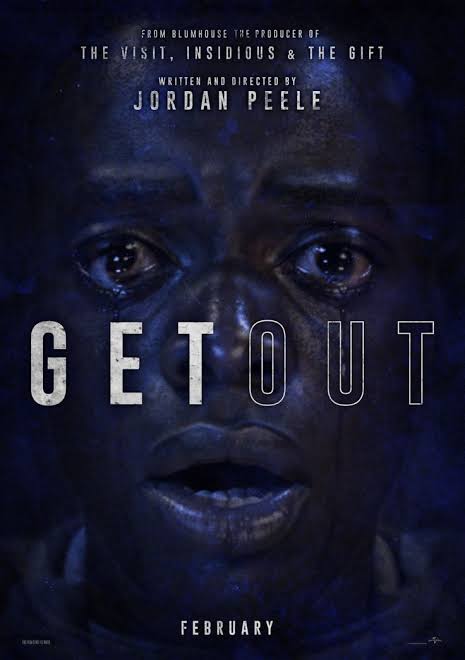
Get Out
Satirical, Unsettling, Darkly Comic, Escalating Dread
Based on a publicly circulated draft of this screenplay sourced online — it may differ from the official shooting script or final film. Shown to demonstrate ProofIntelligence.
A young Black photographer visits his white girlfriend's wealthy family estate for the weekend, only to discover their liberal veneer masks a horrifying conspiracy to transplant the minds of aging white elites into the bodies of abducted Black people.
Executive Summary
Get Out is a high-concept social horror screenplay that delivers a commercially viable, critically prestigious package at a contained budget — the ideal investment profile. The script transforms the universal 'meet the parents' scenario into a terrifying racial allegory with a twist-driven structure that guarantees word-of-mouth and repeat viewings. With a single primary location, a cast of under 20 speaking roles, and practical effects requirements, this can be produced in the ₹5-15Cr range with potential returns many multiples of that. The four lead roles (Chris, Rose, Rod, Missy) are all star-making parts that will attract talent, and the genre framework provides a built-in global audience while the social commentary opens doors to awards consideration and prestige press coverage that horror rarely receives.
Why this verdict
Get Out is a masterfully conceived social horror screenplay that weaponizes the conventions of the 'meet the parents' genre into a searing racial allegory. Jordan Peele's script demonstrates exceptional concept strength — the premise of a white liberal family literally consuming Black bodies is both commercially viable and thematically devastating. The structure is tight, the dialogue is sharp and voice-distinct, and the escalation from social discomfort to full-blown horror is expertly calibrated. Minor craft issues (some over-written action lines, a few pacing lulls in Act Two's party sequence) keep it from absolute perfection, but this is a rare screenplay that operates on multiple levels simultaneously and delivers on all of them.
Score Breakdown
Casting
Daniel Kaluuya
as CHRIS
Kaluuya possesses the quiet intensity and emotional depth Chris requires — his ability to convey terror, intelligence, and vulnerability through subtle facial expression is ideal for a character who must communicate internal horror while maintaining external composure. His physicality is naturally athletic without being imposing, matching Chris's photographer-artist energy.
Allison Williams
as ROSE
Williams has the precise combination of girl-next-door warmth and underlying coldness that Rose demands — her work in prestige television demonstrates the ability to play likeable surfaces masking darker interiors. Her physical type (brunette, freckled, approachable) matches the script's description exactly.
Lil Rel Howery
as ROD
Howery's stand-up background gives him the improvisational energy and comedic timing Rod requires, while his everyman physicality grounds the character's outlandish conspiracy theories in relatable authenticity. His ability to shift from hilarious to genuinely concerned mirrors Rod's dual function as comic relief and moral compass.
Catherine Keener
as MISSY
Keener's career-long ability to project intellectual warmth that can curdle into menace makes her ideal for Missy's dual nature as caring therapist and predatory hypnotist. Her composed, measured screen presence perfectly suits a character whose power comes from stillness and control.
Bradley Whitford
as DEAN
Whitford's extensive experience playing liberal authority figures gives him the exact register Dean requires — the performative progressive warmth that masks something darker. His physical presence (tall, barrel-chested, avuncular) matches the script's description of a 'bear hug of a man.'
Stephen Root
as JIM
Root brings gravitas and unpredictability to every role — his ability to seem reasonable and sympathetic before revealing menace is precisely what Jim Hudson requires. His physical presence and vocal authority would make the exposition-heavy television scene compelling rather than static.
Pacing & Rhythm
Overall pace
Deliberately escalating — slow-burn first half accelerating to breakneck third act
The pacing curve follows a masterful slow-burn architecture. The cold open establishes the script can deliver visceral horror, then deliberately pulls back to romantic comedy rhythms, building audience trust before systematically dismantling it. The pace escalates in waves — each peak (hypnosis, Andre's breakdown, the shoebox reveal) is higher than the last, with comedy beats (Rod's calls, the police station) providing essential valleys that prevent audience fatigue. The final 25 pages maintain near-maximum intensity with remarkable stamina. The only slight dip is the Jim Hudson exposition sequence, which temporarily slows the third act's momentum.
SLOW · pp. 47–55
The party sequence involves multiple short conversations with guests that individually feel repetitive in their racial microaggression pattern.
Fix: Trim one or two guest interactions (Parker/April Dray conversation could be shortened) to tighten the party montage while preserving the cumulative effect.
SLOW · pp. 19–26
The house tour and outdoor patio conversation, while establishing character, covers a lot of expository ground at a leisurely pace.
Fix: The Dean tour could lose a few beats — the dead bird and some of the room descriptions feel slightly over-detailed for their narrative payoff.
RUSHED · pp. 92–97
The escape sequence moves at such velocity that some of the action choreography (the Georgina car crash, Walter/Grandpa confrontation) feels compressed.
Fix: An additional beat of Chris processing the Georgina-is-Grandma revelation could add emotional weight to the climax without slowing momentum significantly.
Conflict Escalation
The conflict escalation is masterfully calibrated, following a slow-burn pattern that mirrors the protagonist's own rationalization process. Tension rises in waves rather than linearly — each social discomfort is followed by a moment of normalcy that allows Chris (and the audience) to dismiss concerns, making each subsequent escalation more disturbing. The script achieves three distinct tension peaks: the hypnosis scene (page 36), the Andre/Logan breakdown (page 62), and the full unmasking/escape sequence (pages 75-97). The final act maintains near-maximum tension for over 20 pages without fatigue.
Peak moment · page 96
Walter/Grandpa attacks Chris on the road, is flash-triggered back to his original self, shoots Jeremy, then turns the gun on himself — the most intense convergence of physical danger, emotional horror, and thematic revelation in the script.
Protagonist Arc
Chris's internal arc is a masterful descent and partial recovery. He begins in a state of cautious happiness, gradually descends through social discomfort, psychological violation, betrayal, and existential horror, hitting absolute bottom when captured. His recovery is not a return to his starting state but a transformation — from a man who freezes in crisis (his mother's death) to one who acts decisively. The prison ending prevents a false triumph; Chris has broken free of the Armitages but not of the larger system. His arc directly mirrors his childhood trauma — he was paralyzed then, and the Armitages exploit that paralysis, but this time he fights. The arc is complete but deliberately bittersweet.
Scene Audit
40 scenes evaluated — tension, pacing contribution, and whether each earns its place.
| Pg | Scene | Purpose | Tension | Verdict |
|---|---|---|---|---|
| 1 | EXT. SUBURBAN STREET ANDRE · RICHARD | Establish the threat — Andre's abduction sets up the horror premiseMasterful cold open; tutorial audio is iconic. | 75accelerates | essential |
| 6 | INT. BROOKLYN LOFT CHRIS · ROSE | Establish Chris and Rose's relationship as warm and genuineGrounds the romance; makes betrayal devastating. | 5decelerates | essential |
| 7 | INT. BROOKLYN LOFT - BEDROOM CHRIS · ROSE | Chris asks if parents know he's Black — central tension establishedPlants the racial anxiety seed efficiently. | 20maintains | essential |
| 10 | INT. ROSE'S CAR CHRIS · ROSE · ROD | Introduce Rod; establish Chris-Rod friendship dynamicRod's voice established perfectly in one call. | 10maintains | essential |
| 13 | EXT. RURAL ROAD CHRIS · ROSE | Deer collision — foreshadows the Sunken Place deer imageryDeer motif begins; Chris's empathy established. | 35accelerates | essential |
| 14 | INT. ROSE'S CAR CHRIS · ROSE · OFFICER CROWE | Racial profiling encounter; Rose defends Chris — builds false trustRose's defense is the script's best misdirection. | 40accelerates | essential |
| 17 | EXT. ARMITAGE ESTATE CHRIS · ROSE · DEAN · MISSY · WALTER | Arrival and first impressions — Dean's performative warmth, Walter's eerinessWalter's fading smile is perfectly unsettling. | 25maintains | essential |
| 21 | INT. ARMITAGE DOWNSTAIRS HALLWAY CHRIS · DEAN | House tour — exposition about family history, grandfather's racingSlightly long; trim non-essential room descriptions. | 15decelerates | needs_work |
| 24 | INT. ARMITAGE KITCHEN CHRIS · DEAN · GEORGINA | Introduce Georgina's unsettling demeanorGeorgina's eerie smile is immediately wrong. | 30maintains | essential |
| 25 | EXT. BACKYARD CHRIS · DEAN | Dean addresses the 'Black servants' elephant in the roomDean's liberal guilt speech is perfectly calibrated. | 25maintains | essential |
| 26 | EXT. OUTDOOR PATIO CHRIS · ROSE · DEAN · MISSY · GEORGINA | Family conversation — Chris's backstory, hypnosis offer, Georgina's overflowMultiple setups planted naturally in conversation. | 30maintains | essential |
| 30 | INT. ARMITAGE DINING ROOM CHRIS · ROSE · DEAN · MISSY · JEREMY | Dinner — Jeremy's stories, his aggressive interest in Chris's physicalityJeremy's 'genetic make-up' line is chilling. | 40accelerates | essential |
| 34 | EXT. BACKYARD - NIGHT CHRIS · WALTER · GEORGINA | Chris sneaks out for a smoke; Walter running, Georgina's window stareNighttime dread perfectly executed. | 55accelerates | essential |
| 36 | INT. MISSY'S OFFICE CHRIS · MISSY | The hypnosis scene — Chris sent to the Sunken PlaceThe script's first major horror set-piece; iconic. | 75accelerates | essential |
| 43 | INT. ROSE'S BEDROOM - DAWN CHRIS | Chris wakes confused — was it a dream? Transition to morningEffective disorientation mirrors Chris's state. | 30decelerates | essential |
| 44 | EXT. BACKYARD - DAWN CHRIS · WALTER | Chris confronts Walter; Walter's unsettling responses confirm something is wrongWalter's 'doggone keeper' line is perfectly off. | 45maintains | essential |
| 47 | EXT. BACKYARD - PARTY CHRIS · ROSE · GORDON · EMILY | Party begins — Gordon's Tiger Woods comment, racial fetishizationTiger Woods reference is pointed and efficient. | 35maintains | essential |
| 48 | EXT. BACKYARD CHRIS · ROSE · LISA · NELSON | Lisa's sexual fetishization of ChrisSexual commodification theme made explicit. | 35maintains | essential |
| 49 | EXT. BACKYARD CHRIS · ROSE · PARKER · APRIL | Parker's pseudo-intellectual racism about skin color advantageCovers ground already established; could trim. | 30decelerates | needs_work |
| 50 | EXT. BACKYARD CHRIS · ANDRE | Chris meets Andre/Logan — recognizes something deeply wrongAndre's transformed voice is deeply unsettling. | 50accelerates | essential |
| 52 | EXT. GAZEBO CHRIS · JIM | Jim Hudson conversation — genuine connection, art world offerBuilds false trust; Jim's later betrayal lands harder. | 25maintains | essential |
| 54 | EXT. BACKYARD CHRIS · ROSE · JEREMY | Badminton game — Chris performs for the crowdChris as spectacle; crowd's hunger made visible. | 30maintains | essential |
| 55 | INT. ARMITAGE LIVING ROOM Party guests | Guests drop their fake conversations — reveal they're monitoring ChrisChilling reveal; recontextualizes every interaction. | 60accelerates | essential |
| 56 | INT. ROSE'S BEDROOM CHRIS · ROSE | Chris discovers phone unplugged; paranoia vs. Rose's dismissalRose's gaslighting begins to show cracks. | 45maintains | essential |
| 57 | INT. CHRIS' APARTMENT / INT. ROSE'S ROOM CHRIS · ROD | Chris calls Rod — Rod identifies Andre HayworthRod connects the dots; comedy meets horror. | 50accelerates | essential |
| 61 | INT. ARMITAGE UPSTAIRS HALLWAY CHRIS · GEORGINA | Georgina's apology — 'The Armitages are so good to us'Georgina's pain behind the smile is heartbreaking. | 45maintains | essential |
| 62 | EXT. BACKYARD CHRIS · ANDRE · PHIL · HIROKI | Andre/Logan's flash-triggered breakdown — 'GET OUT'The script's most visceral and iconic moment. | 85accelerates | essential |
| 65 | EXT. BACKYARD DEAN · Party guests | The silent auction for Chris's bodyDevastating dramatic irony; slavery auction parallel. | 80accelerates | essential |
| 66 | EXT. LAKESIDE CHRIS · ROSE | Chris wants to leave; Rose's pregnancy revelation; Chris's mother storyEmotional core; Chris's vulnerability exploited. | 55decelerates | essential |
| 71 | INT. ROSE'S BEDROOM CHRIS · ROSE | Chris discovers the shoebox of photos — Rose exposedThe twist reveal; devastating and perfectly placed. | 90accelerates | essential |
| 73 | INT. FOYER/LIVING ROOM CHRIS · ROSE · DEAN · MISSY · JEREMY | The family drops their facade; Chris captured via Sunken Place triggerPoint of no return; all masks off. | 95accelerates | essential |
| 79 | INT. GAMES ROOM CHRIS | Chris wakes bound to chair; karaoke conditioning beginsClaustrophobic horror; chair setup planted. | 70maintains | essential |
| 80 | INT. POLICE STATION ROD · DETECTIVE LATOYA | Rod's police report laughed off — no institutional help comingFunny and devastating; systemic failure theme. | 40decelerates | essential |
| 83 | INT. CHRIS' LOFT ROD · ROSE | Rose manipulates Rod on the phone; family watches approvinglyRose's predatory skill on full display. | 55maintains | essential |
| 86 | INT. GAMES ROOM / INT. HOSPITAL ROOM CHRIS · JIM | Jim explains the Coagula procedure via televisionNecessary exposition but overly dense; needs breaking up. | 70maintains | needs_work |
| 91 | INT. GAMES ROOM CHRIS · ROSE | Chris fakes hypnosis; attacks Rose; begins escapeCotton earplugs payoff is brilliant and cathartic. | 92accelerates | essential |
| 93 | INT. OPERATING ROOM / INT. DARK HALLWAY CHRIS · DEAN · JEREMY | Chris kills Dean with deer antlers; fights JeremyDeer antlers payoff; poetic and visceral. | 95accelerates | essential |
| 94 | INT. KITCHEN / INT. DINING ROOM CHRIS · MISSY | Chris defeats Missy; retrieves phoneTeacup weapon turned against her; satisfying. | 90accelerates | essential |
| 95 | EXT. FRONT YARD / INT. SPORTS CAR CHRIS · GEORGINA · WALTER · JEREMY | Car escape; Georgina crash; Walter/Grandpa confrontationPeak action; camera flash payoff is perfect. | 98accelerates | essential |
| 98 | INT. MAXIMUM SECURITY PRISON CHRIS · ROD | Epilogue — Chris imprisoned; at peace but trapped by the systemBleak but thematically perfect ending. | 30decelerates | essential |
Beat Sheet · Save The Cat
The script adheres remarkably well to the Save the Cat structure while feeling organic rather than formulaic. Every beat is present and most are executed at a high level. The Break Into Two (hypnosis) lands slightly later than expected but works because the extended setup makes the violation more impactful. The Midpoint (Andre's breakdown) is perfectly placed and genuinely shifts the stakes. The All Is Lost moment (Rose's reveal) is one of the most devastating in modern genre writing. The only slight weakness is the Dark Night of the Soul, where Jim's exposition-heavy explanation temporarily reduces dramatic tension. The Final Image brilliantly mirrors and inverts the Opening Image — both show a Black man trapped by a system he can't escape.
| Beat | Expected | Actual | Present | Quality |
|---|---|---|---|---|
Opening Image Andre is stalked and abducted on a suburban street — establishes the world's danger for Black men in white spaces | p. 1 | p. 1 | 95 | |
Theme Stated Chris asks 'Do they know I'm Black?' — the central question of whether white acceptance is genuine or performative | p. 5 | p. 7 | 90 | |
Setup Chris and Rose's relationship, Rod's friendship, the drive upstate — establishing the world Chris is leaving behind | p. 10 | p. 6 | 85 | |
Catalyst The deer collision and cop encounter — Chris enters a world where his Blackness makes him vulnerable, and Rose's defense builds false trust | p. 12 | p. 14 | 90 | |
Debate Arrival at the estate — Chris debates whether the family's oddness is racism or just awkwardness; Walter and Georgina raise questions | p. 15 | p. 17 | 85 | |
Break Into Two Missy hypnotizes Chris into the Sunken Place — he has crossed a threshold from social discomfort into genuine psychological violation | p. 25 | p. 36 | 92 | |
B Story Rod's friendship — the B Story is Chris's connection to his real life and identity, represented by Rod's phone calls and eventual investigation | p. 30 | p. 11 | 85 | |
Fun and Games The party sequence — Chris navigates increasingly bizarre and uncomfortable interactions with wealthy white guests who treat him as a commodity | p. 35 | p. 47 | 88 | |
Midpoint Andre/Logan's flash-triggered breakdown screaming 'GET OUT' — false victory becomes false defeat as Chris realizes the danger is real | p. 50 | p. 62 | 95 | |
Bad Guys Close In The silent auction, Rose's pregnancy manipulation, Chris's growing paranoia dismissed by Rose — the trap tightens from all sides | p. 55 | p. 65 | 90 | |
All Is Lost Rose reveals herself as a predator; Missy triggers the Sunken Place; Chris is captured and taken to the games room | p. 75 | p. 75 | 95 | |
Dark Night of the Soul Chris bound to the chair, forced to listen to karaoke, learns the horrifying truth of the Coagula procedure from Jim Hudson | p. 80 | p. 79 | 82 | |
Break Into Three Chris uses cotton from the chair arm to block the hypnotic trigger — he fakes being under and attacks Rose when she comes to prep him | p. 85 | p. 91 | 95 | |
Finale Chris fights through the entire Armitage family — Dean (deer antlers), Missy (teapot), Jeremy (keys/judo), Georgina, Walter/Grandpa — using skills and objects established throughout | p. 90 | p. 92 | 90 | |
Final Image Chris in prison, at peace but incarcerated — a mirror of the opening's suburban abduction, suggesting the system that enables the Armitages also imprisons their victims | p. 99 | p. 99 | 88 |
What's Working
Masterful Concept Integration
The premise seamlessly fuses racial commentary with horror genre mechanics — every horror trope (the creepy house, the sinister family, the body-snatching) maps perfectly onto a real-world racial dynamic (liberal racism, fetishization, cultural appropriation taken to its literal extreme). The concept is both commercially high-concept and thematically profound.
The Rose Twist
Rose's reveal as a willing predator is one of the most effective character twists in modern genre writing. The script earns it by making her defense of Chris at the traffic stop feel genuine, creating a devastating betrayal that recontextualizes every scene. The shoebox of photos is an iconic reveal moment.
Exceptional Rewatchability
Nearly every line of dialogue and character interaction carries double meaning once the twist is known. This creates enormous rewatch value — a critical commercial asset for both theatrical repeat business and streaming engagement metrics.
Budget-to-Concept Ratio
The script achieves blockbuster-level concept ambition on a contained budget — single primary location, small cast, practical effects. This makes it an extremely attractive investment proposition with a low profitability threshold and massive upside potential.
Rod as Comic Relief
Rod provides perfectly calibrated comic relief that prevents the horror from becoming oppressive while simultaneously functioning as the script's moral compass and voice of reason. His scenes with Chris are the script's most naturalistic and entertaining dialogue.
What to Fix
Dean's Unmasking Monologue
Dean's fire-and-sacrifice speech when the family drops their facade is overwritten and veers into theatrical melodrama. The shift from subtle menace to grandiose villain monologue feels tonally inconsistent with the script's otherwise grounded approach to horror. Trimming this by 30-40% would maintain the reveal's impact without losing the audience.
Exposition-Heavy Procedure Explanation
Jim Hudson's explanation of the Coagula brain transplant procedure, while necessary, reads as a dense info-dump that temporarily halts the third act's momentum. The science fiction elements sit slightly uneasily with the otherwise grounded horror, and the explanation could be more dramatically integrated.
Bleak Ending May Limit Commercial Ceiling
The prison ending, while thematically powerful and consistent with the script's racial commentary, denies the audience cathartic release. This is a bold artistic choice but may limit mainstream commercial appeal, particularly for audiences who have invested emotionally in Chris's survival and escape.
Supporting Cast Depth
While the party guests are efficiently deployed as thematic devices, most function as one-note microaggression delivery systems rather than fully realized characters. The Greenes, Deets, and Drays blur together slightly, and giving one or two more distinctive personalities could strengthen the party sequence.
Rewrite priorities
Cut the monologue by 40% — keep the core revelation about 'sacrifice' and 'vessel' but remove the pseudo-philosophical fire metaphor. Dean is scarier when clinical, not theatrical.
Issue: Dean's fire/sacrifice monologue is overlong and tonally inconsistent with the script's grounded horror approach
Break the explanation into shorter exchanges. Let Chris interrupt more, react more. Show his horror building rather than having him passively receive information. Consider visual aids on the TV screen rather than pure verbal exposition.
Issue: Jim Hudson's Coagula procedure explanation is a dense info-dump that stalls Act Three momentum
Cut or significantly trim the Parker/April Dray conversation — their 'skin color advantage' dialogue covers ground already established by other guests. Redistribute that time to the Andre/Logan encounter or the Jim Hudson conversation.
Issue: The party guest interactions become slightly repetitive in their microaggression pattern
Either develop this as a more significant emotional lever (is it real? is it a tactic?) or cut it. As written, it appears once and is never resolved, feeling like a loose thread rather than a deliberate ambiguity.
Issue: The pregnancy subplot with Rose feels underdeveloped and potentially manipulative
Tighten scene descriptions throughout — particularly the house tour sequence and party setup. Trust the reader to fill in details; focus descriptions on what's emotionally or narratively essential.
Issue: Some action lines are over-described with unnecessary detail that slows the read
Biggest improvement lever
Tightening the Act Three exposition — specifically Dean's unmasking monologue and Jim Hudson's procedure explanation. Both sequences temporarily halt the script's otherwise masterful momentum at the exact moments when tension should be at its highest. Cutting Dean's speech by 40% and breaking Jim's explanation into shorter exchanges with more of Chris's emotional reactions would maintain the relentless escalation that makes the rest of the script so effective.
Emotional Rhythm
The emotional rhythm is exceptionally well-orchestrated, alternating between warmth and dread in the first half before plunging into sustained horror in the second. Peele's genius is in the comedy — Rod's scenes provide essential emotional relief that prevents audience fatigue, while the Chris-Rose romance creates genuine warmth that makes the betrayal devastating. The script achieves an unusually wide emotional range for horror, moving from romantic comedy to social satire to psychological terror to action thriller to tragic resignation. The emotional journey is earned at every stage.
Act Structure
Act One
pp. 1–28Chris and Rose drive upstate to meet her wealthy white family. Chris navigates the social awkwardness of being the first Black boyfriend, meets the eerily compliant Black servants Walter and Georgina, and is offered hypnosis by Missy. The family dynamics seem off but explainable.
Key turning point
Missy hypnotizes Chris against his will, sending him to 'The Sunken Place' — a terrifying psychological prison that reveals the family's true power over him.
Act One is expertly constructed, establishing Chris as a relatable, intelligent protagonist while layering micro-aggressions and social discomfort that function as both realistic racial dynamics and horror foreshadowing. The deer collision, the cop encounter, and Rose's defense of Chris all serve double duty — building the relationship while planting seeds of the twist. The hypnosis scene is a masterful act break that shifts the genre from social drama to psychological horror.
Act Two
pp. 29–75The annual party brings a parade of wealthy white guests who treat Chris like an exotic commodity. Chris encounters Andre/Logan, recognizes something is deeply wrong, and the silent auction reveals Chris is being sold. Chris discovers Rose's shoebox of photos proving she has lured multiple Black men before him. The family drops their facade.
Key turning point
Chris discovers Rose's shoebox of photographs with previous Black boyfriends, including Walter — revealing Rose as a willing predator and the entire relationship as a trap.
Act Two maintains tension through social horror before escalating to genuine terror. The party sequence is brilliant — each guest interaction ratchets discomfort while the silent auction happening simultaneously provides dramatic irony. The Andre/Logan flash-triggered outburst is a perfectly placed midpoint shock. The pacing slightly sags during some party conversations, but the Rose reveal and the family's unmasking provide a devastating Act Two climax.
Act Three
pp. 76–99Chris is imprisoned in the games room and learns the truth about the Coagula procedure — brain transplantation that will give Jim Hudson control of Chris's body. Chris uses cotton from the chair to block the hypnosis trigger, fakes unconsciousness, and fights his way out, killing or incapacitating the entire Armitage family. He is ultimately arrested and imprisoned.
Key turning point
Chris stuffs cotton in his ears to block the hypnotic trigger, fakes being under, and strangles Rose — turning the tables and beginning his violent escape.
Act Three is a propulsive, visceral escape sequence that pays off nearly every setup from earlier acts — the cotton stuffing, the deer antlers, the camera flash, the judo training, Jeremy's keys. The ending in prison is bleak and thematically resonant, denying the audience a clean catharsis and reinforcing the script's thesis about systemic racism. The pacing is relentless and the action choreography is inventive.
Midpoint · page 50
Andre/Logan's camera-flash triggered breakdown — he screams 'GET OUT' at Chris, momentarily breaking free from his mental prison, while simultaneously the silent auction for Chris's body takes place offscreen.
This is a superb midpoint that operates on multiple levels. It shifts the stakes from social discomfort to genuine danger, confirms Chris's suspicions that something is deeply wrong, and provides the audience with the horrifying realization that Andre is trapped inside Logan. The simultaneous auction raises the dramatic irony to unbearable levels.
Character Analysis
Protagonist · arc 85/100
CHRIS
want
To be accepted by his girlfriend's family and prove the relationship can work across racial lines
need
To trust his own instincts about danger rather than rationalizing away red flags to avoid social discomfort
flaw
Survivor's guilt over his mother's death makes him unable to abandon people — even when self-preservation demands it; he also suppresses his instincts to avoid being seen as 'the paranoid Black guy'
Chris is an exceptionally well-drawn protagonist whose internal conflict mirrors the script's central theme. His guilt over his mother's death is the psychological lever the Armitages exploit, and his arc from paralysis to action is deeply satisfying. The character is grounded, intelligent, and sympathetic without being passive — he questions things throughout, making his eventual entrapment feel tragic rather than foolish.
Antagonist · threat 90/100
ROSE
Rose is one of the most effective antagonists in modern horror screenwriting. Her function as the 'lure' is devastating precisely because the audience — like Chris — genuinely believes in her. The cop scene where she defends Chris is a masterclass in misdirection, making her later reveal as a willing predator feel like a gut-punch. Her emotional blankness once unmasked ('You know I can't give you the keys') is chilling. The shoebox of photos is an iconic reveal.
Supporting cast
18 characters · 12 distinct voicesThe supporting cast is efficiently deployed — each party guest serves a specific function in the microaggression escalation (Gordon/Tiger Woods, Lisa/sexual fetishization, Parker/intellectual racism, Hiroki/direct interrogation). Walter and Georgina are masterfully written as uncanny valley figures whose wrongness is felt before it's understood. The Shaw family in the opening provides a perfect frame of suburban obliviousness. Every character, no matter how brief, serves the thematic architecture.
Character Presence
Screen presence by act; total scene count on the right.
Dialogue
Subtext
Voice
Density: Medium-high — dialogue-driven first two acts with action-dominant third act
The dialogue is one of the script's strongest elements, operating on multiple levels simultaneously. Nearly every line from the Armitage family carries sinister double meaning on reread — Dean's 'one down, a few hundred thousand to go' about deer, Missy's 'you'll do just fine,' Rose's 'there's a lot you don't know about me.' Chris and Rod's conversations are naturalistic and funny, providing authentic Black male friendship dynamics that ground the horror in reality. Rod's dialogue is consistently hilarious while being thematically pointed. The voice distinction between characters is strong — Chris's measured intelligence, Rod's unfiltered energy, Dean's performative liberalism, Missy's clinical calm, and Rose's shifting registers from warm girlfriend to cold predator are all clearly differentiated.
The dialogue-to-action ratio shifts dramatically across the three acts, mirroring the genre transition from social drama to survival horror. Acts One and Two are dialogue-heavy, appropriate for a story built on social dynamics, microaggressions, and psychological manipulation. Act Three flips to action-dominant as Chris fights his way out. This shift is one of the script's structural strengths — the audience has been lulled by conversation, making the sudden violence more shocking. Description is economical throughout, with Peele favoring lean, evocative scene-setting over purple prose.
Notable lines
“You know I can't give you the keys, baby.”
ROSE · page 75
The single most devastating line in the script — transforms Rose from ally to predator in six words. The casual 'baby' is psychopathic.
“GET THE FUCK OUT OF HERE!!!!”
ANDRE · page 63
Andre's real voice breaking through Logan's persona — the shift in register from measured to desperate is the script's emotional peak.
“We don't hate you. We want to be you.”
JIM · page 88
Crystallizes the script's thesis about liberal racism — fetishization and consumption disguised as admiration.
“I'm just connecting the dots you presenting me with.”
ROD · page 58
Rod's conspiracy theory is played for laughs but is entirely correct — brilliant dramatic irony that rewards the audience.
“One down... a few hundred thousand to go.”
DEAN · page 19
Ostensibly about deer overpopulation, but on rewatch carries a chilling double meaning about the family's view of expendable bodies.
“Nothing I don't want to be doing.”
WALTER · page 44
Grandpa Armitage speaking through Walter — technically true and deeply unsettling in its calm delivery.
Lines to fix
“The fire monologue about baptism and immortality (pages 74-75)”
DEAN · page 74
Dean's unmasking speech is slightly overwritten and veers into melodrama. The pseudo-religious rhetoric could be trimmed by 30% — the menace is more effective in shorter bursts.
“The extended brain transplant exposition (pages 87-90)”
JIM · page 87
While necessary, Jim's explanation of the Coagula procedure is dense and clinical. Breaking it up with more of Chris's emotional reactions would maintain tension during this exposition-heavy sequence.
Market & Audience
This script sits at the rare intersection of commercial viability and critical prestige. The concept is instantly pitchable ('Guess Who's Coming to Dinner meets Rosemary's Baby'), the budget requirements are modest relative to the potential return, and the social commentary gives it awards-season relevance. The single-location structure keeps costs contained while the high-concept premise drives marketing. In the Indian context, this would be comparable to how films like Tumbbad or Stree proved that smart horror with cultural commentary can be both critically acclaimed and commercially successful. The script's greatest market asset is its rewatchability — the double meanings embedded throughout incentivize repeat viewings.
Audience
Horror-literate adults 18-45, particularly audiences interested in socially conscious genre filmmaking and racial commentary
Budget band
mid (₹5-25Cr equivalent — single primary location, limited cast, practical effects)
Trend
Social horror and elevated genre filmmaking have proven massively commercial post-2017, with audiences hungry for horror that operates as allegory. The intersection of racial politics and genre entertainment is a proven market.
Platforms
Theatrical (wide release) · Premium OTT (Netflix, Amazon Prime) · Festival Circuit (Sundance, TIFF)
Get Out's genius is its ability to satisfy both critical and commercial audiences simultaneously. The horror genre framework provides mass accessibility while the racial commentary and structural sophistication earn critical prestige. Youth audiences will respond to the social media-friendly concept, quotable dialogue, and Rod's humor. OTT/streaming appeal is exceptionally high due to rewatchability — the twist demands a second viewing. Family appeal is low due to violence and mature themes. The primary audience is critics and festival programmers who will champion it as a landmark in socially conscious genre filmmaking, but the commercial audience is nearly as strong.
Risks · Low-Moderate
- • Racial subject matter requires sensitive marketing to avoid alienating audiences who might perceive it as 'preachy'
- • The bleak prison ending may frustrate mainstream audiences expecting cathartic resolution
- • Horror-comedy tonal balance is difficult to execute — mishandling Rod's comedy could undercut the horror
- • The twist relies on audience not guessing Rose's involvement — marketing must avoid spoilers
Mitigations
- • The horror genre framework makes the racial commentary accessible rather than didactic
- • Strong word-of-mouth potential due to twist reveals and rewatchability
- • The concept is instantly marketable with a single-line pitch
- • Low-to-mid budget means profitability threshold is achievable even with modest opening
- • Cast-friendly roles — Chris, Rose, and Rod are all star-making parts that will attract talent
Investment Case
Franchise Potential
sequel possible- The Coagula society — its history, other members, other operations beyond the Armitages
- The Sunken Place as a concept — other victims' experiences, the psychological mechanics
- Rod Williams as a character — his investigation could drive a sequel
- The broader conspiracy — Jim Hudson's gallery world, other wealthy families involved
Get Out is fundamentally a standalone story — Chris's arc is complete, and the Armitage family is destroyed. However, the Coagula society is established as larger than one family, creating natural sequel territory. The world-building around brain transplantation, the Sunken Place, and the auction system suggests a broader conspiracy that could sustain additional stories. Rod's character has clear spin-off potential. That said, the script's power comes from its specificity and surprise — sequels risk diluting the original's impact. A spiritual successor exploring different facets of racial horror (as Peele did with Us) is more viable than a direct sequel.
International Viability
While rooted in specifically American racial dynamics, the script's core themes — the outsider consumed by a predatory community, the horror of losing bodily autonomy, the gap between performed acceptance and genuine respect — are universally resonant. The horror genre provides a universal language that transcends cultural specificity. Markets with their own histories of racial or caste-based exploitation (South Africa, Brazil, India) will find particular resonance. The script's genre mechanics (body horror, conspiracy thriller, escape narrative) work independently of cultural context.
Strong markets: United States (primary), United Kingdom, France, Brazil, South Africa, Australia, South Korea, India (urban OTT audiences)
Cultural barriers: Specific American racial dynamics (Black-white relations) may not translate directly to all markets; Some humor relies on African-American cultural references and speech patterns; The TSA/police subplot is specifically American institutional critique
Investment Readiness
low riskReady for packagingThis script is exceptionally investment-ready. The budget requirements are modest (single primary location, small cast, practical effects), the concept is instantly marketable, and the genre framework provides built-in audience. The social commentary adds awards-season potential and critical prestige that elevates it above standard horror fare. The contained production model (Blumhouse-style) means profitability is achievable even with a modest theatrical opening. The script's rewatchability and twist-driven structure make it ideal for both theatrical word-of-mouth and streaming longevity. Risk is low given the budget-to-concept ratio; the primary risk factor is the bleak ending, which could be modified if needed (though the artistic case for keeping it is strong).
Attachment suggestions
- • A rising Black leading man with dramatic range and physical presence for Chris (Daniel Kaluuya type)
- • A versatile white actress who can play warm and then terrifyingly cold for Rose
- • A comedian with dramatic chops for Rod — someone who can deliver humor without undermining horror
- • A prestige director comfortable with genre filmmaking and social commentary
- • A horror-savvy producer (Blumhouse model) who can execute on a contained budget
Comparable Films
Rosemary's Baby (1968)
Shares the structure of a protagonist slowly realizing everyone around them is part of a sinister conspiracy, with domestic spaces becoming sites of horror and bodily violation.
The Stepford Wives (1975)
The concept of people being replaced by compliant versions of themselves — Walter, Georgina, and Andre/Logan are essentially 'Stepford' figures, their original identities suppressed by a privileged community.
Guess Who's Coming to Dinner (1967)
Directly inverts the 'meet the parents' interracial relationship drama — the liberal white family's acceptance is revealed to be predatory rather than progressive.
Parasite (2019)
Class and social hierarchy weaponized through domestic space, with a wealthy family's home becoming a site of exploitation and violence, culminating in a devastating twist.
Midsommar (2019)
An outsider enters a seemingly welcoming community only to discover they are being groomed for a ritualistic purpose, with bright daylight and social pleasantries masking horror.
Cinema DNA
The directorial sensibilities this script most resembles, weighted by influence.
✦Your Cinema DNA
As the writer-director, Peele's signature blend of social satire, horror genre mechanics, and Black American cultural specificity defines every frame of this script.
Shares Vetrimaaran's commitment to using genre filmmaking as a vehicle for unflinching social commentary about systemic oppression, with protagonists trapped by structures larger than themselves.
The Rosemary's Baby DNA is unmistakable — an outsider entering a seemingly welcoming domestic space that is actually a conspiracy, with escalating paranoia, gaslighting, and the horror of bodily violation.
The verdict, in full
Get Out is a brilliantly conceived social horror screenplay that transforms the familiar 'meet the parents' scenario into a nightmarish allegory about liberal racism and the literal consumption of Black bodies. Chris Washington, a young Black photographer, visits his white girlfriend Rose's wealthy family estate, where escalating social discomfort gives way to the revelation that the Armitages run a secret society that transplants aging white minds into young Black bodies. The script's greatest achievement is its dual functionality — every scene works simultaneously as realistic racial dynamics and horror foreshadowing, creating extraordinary rewatchability. Jordan Peele demonstrates exceptional command of genre mechanics, deploying the 'Sunken Place' as both a terrifying set-piece and a resonant metaphor for Black silencing. The Rose twist — revealing the seemingly progressive girlfriend as the family's willing lure — is one of the most effective character reveals in modern genre writing. While the third act's exposition sequences could be tightened and the bleak prison ending may limit mainstream appeal, this is a rare screenplay that achieves commercial high-concept and thematic depth in equal measure.
Your screenplay deserves this.
Every section you just read — scores, cast, pacing curves, scene-by-scene audit, market read, and a producer-ready verdict — generated for your script in minutes.
Registered with tamper-proof timestamps · Yours alone
Analysis of a publicly available draft of this screenplay sourced online. It may differ from the official shooting script or final film. Shown to demonstrate ProofIntelligence — not an official or licensed screenplay.